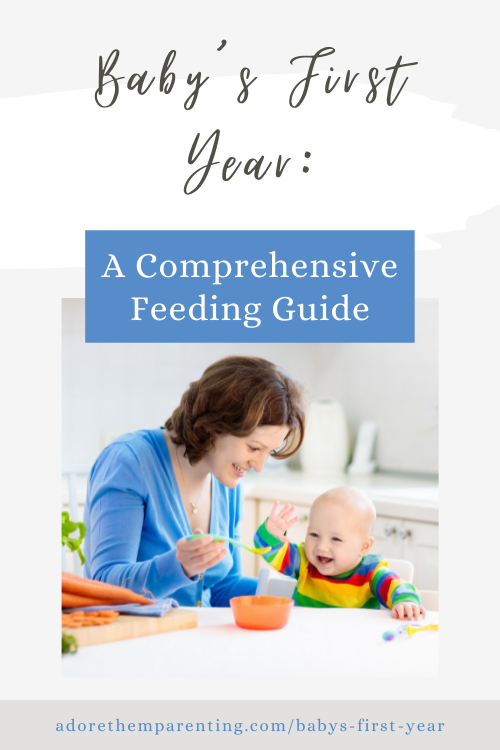
 Baby’s First Year: A Comprehensive Feeding Guide
As a new parent, your baby’s safety and well-being are your top priority. Whether this is your first child or your tenth, it’s easy to feel overwhelmed trying to ensure they are healthy and receive everything they need to thrive.
Some of the top questions parents have revolve around feeding their infant. Knowing whether to breastfeed or use formula. When to introduce solid foods. And what foods are safe for your baby’s age can be confusing.
That’s why this comprehensive guide will tell you everything you need to know about feeding your baby for the first year, so you don’t have to worry any longer!
For more on this topic, check out the full Baby’s First Year collection
Breastfeeding Vs. Formula
Breastfeeding
There’s no doubt that the breast is best when it comes to feeding your baby! Breastmilk offers infants complete and total nutrition, allowing them to receive the nutrients they need to nourish their rapidly growing bodies. From the moment your little one is born, allow them to eat every two to three hours as their hunger cues demand.
To ensure your baby ingests the nutrient-rich hindmilk, alternate which breast you begin feeding them with, allowing them to completely empty it before switching them to the other side. In the first month, don’t worry about setting a feeding schedule since your infant is adjusting to life in the outside world and growing rapidly. A schedule isn’t necessary as long as they’re eating a full meal at each feeding and not snacking.
If you’re pumping, store it in a container made explicitly for breastmilk like these, and keep it frozen until ready for use. Never microwave your milk; instead, thaw it in warm water, using an appropriate temperature guideline to ensure safety.
Formula Feeding
For various reasons, many women find they cannot breastfeed their babies. Although breastmilk is the ideal choice, many European organic baby formulas offers complete nutrition with all the vitamins they need. Your baby’s age determines how much formula they need, so always ensure you double-check the bottle to ensure they receive the correct amount. Here is a general guideline for how much formula a typical infant needs (as always, consult with your pediatrician with any questions you may have.)
|
Baby’s Age |
Formula Amount Per Feeding | Feedings Per Hour |
| 1 Month | 2 to 4 Ounces | Six To Eight |
| 2 Months | 5 to 6 Ounces | Five To Six |
| Three To Five Months | 6 To 7 Ounces |
Five To Six |
[Read: Fed is Best – Breastfeeding versus Formula Feeding]

Solid Food
Four To Six Months
Once your baby reaches four to six months old, you may introduce solid food into their diet. You should continue predominately feeding them breastmilk or formula such as Holle Stage 1, but by four months, their digestive tracts have developed enough to begin introducing select solid foods. You’ll know they’re ready for stage one foods when they start showing interest in eating more than simply milk.
Ensure everything is thoroughly pureed with no chunks to guard against choking. Suitable options include:
- Peas
- Sweet Potato
- Butternut Squash
- Green Beans
- Apples
- Peaches
- Bananas
- Liquid Oat Or Barley Cereal (avoid rice cereal)
Six To Eight Months
By six to eight months, your baby can begin eating meat if you choose to include it in their diet. As with the previous months, most foods should continue to be in pureed form. However, once they begin crawling, they may start eating easily dissolvable foods designed specifically for infants.
Foods to introduce at this age include pureed:
- Apricot
- Pumpkin
- Plum
- Carrots
- Peas
- Turkey
- Chicken
- Tofu
Eight To Ten Months
By eight to ten months, your little one is on the go, crawling around and burning a ton of calories. Don’t be surprised if their appetite increases as they gain mobility and begin exploring the world around them. Adding more substantial foods into their diets along with breastmilk and formula can help keep them energized and ready to see what the world is all about. By ten months, you can begin introducing solids cut into small pieces; just ensure the foods are soft enough for them to chew thoroughly with their gums. Foods to introduce at this age include:
- Melon
- Blueberries
- Eggplant
- Leeks
- Asparagus
- Broccoli
- Beef
- Eggs
- Pork
- Flax
- Pasta
- Quinoa
- Millet
- Yogurt
- Cottage Cheese
Ten To Twelve Months
Your baby has grown by leaps and bounds by the end of the first year. They may be standing and trying to take their first steps, saying one or two words (mostly babbling), and getting their first teeth. Their digestive systems also developed impressively from when they were born, allowing them to eat more solid foods. Continue breastfeeding and offering formula for the remainder of their first year to ensure they receive all the nutrients their little bodies need to continue developing. Foods to introduce at this age include:
- Strawberries
- Citrus
- Lentils
- Beans
- Tomatoes
- Spinach
- Corn
- Fish (consult with your pediatrician)
- Cow’s Milk
Conclusion for Baby’s First Year: A Comprehensive Feeding Guide
The first year of your little one’s life is full of exciting milestones and adventures. Ensuring they receive the right food at the proper time doesn’t have to be a guessing game; this guide can give you the confidence you need to feed your baby the new foods they (may or may not) love!
For more on this topic, check out the full Baby’s First Year collection