• Skip to main content

Adore Them Parenting

Practical Positive Parenting Advice and Resources

Practical Positive Parenting

Go here for our book!

  • About Us
  • Our Book
  • Parenting Advice
    • Raising Children
    • Family Life
    • Seasonal
    • View All Topics
  • Free Printables
  • In the Media
  • Shop

Mental Health

How To Protect Your Child’s Ears At A Concert

protect child's ears graphic

Having children is a precious gift. The sound of laughter that fills our homes and overwhelms us with love and gratitude every day is a beautiful feeling. Ok, you don’t feel that every day. And with the current restrictions on getting out of the house, you may be pulling your hair out. But even so, our lives are better for having our children around. So, what things are you looking forward to doing once restrictions are lifted, and we can all socialize as much as we want again? If going to concerts, or other large (or loud) events, is on your list then keep reading below to learn how to protect your child’s ears at a concert.


For more on this topic, check out the full Staying Healthy and Special Needs collections



Concerts And Festivals

Your list may be endless, so keen we are to enjoy life once more. You may be thinking that you would like to attend a live concert. For the past year, concerts have been on hold due to the global pandemic. But hopefully, we will enjoy the thrill of live music in the not too distant future, with hope on the horizon. And it’s good for our mental health to plan things to look forward to, even if it may not happen for awhile. So what do you need to consider when attending concerts or festivals with children?


Ear Plugs

Firstly, make sure you have enough snacks and drinks. Children are notorious for needing above the average person’s snack requirement, so make sure you’re well stocked up. They may also serve as a distraction if your child becomes overwhelmed. If attending a concert or festival with live bands/music, it may be useful to invest in some live performance earplugs for your child’s comfort. Young children can find loud music a little intimidating, so using earplugs specially designed to block background noise will mean they can enjoy the music safely and remain relaxed. Make sure you check the NRR (noise reduction rating) for quality and ultimate protection. There are various options, but most have the same function; they block any noise other than the music, enabling your child to listen safely. So they can still enjoy great sound quality.

The noise at concerts doesn’t just come from music. Thousands of screaming fans are also attending with their contribution. Children are often unaware of this before a concert, so it may cause some discomfort initially.

Some children suffer from hyperacusis, which is a condition that affects the perception of sound. If your child experiences this, loud music will be particularly challenging. It can also cause pain for some children, and in some cases, a child will develop a fear of noise. It can be caused as a result of a medical condition and should be investigated by a professional. A doctor may suggest sound therapy to eliminate or reduce the problem gradually. In the meantime, either avoid large music venues or always provide good quality ear protection for your child so he/she does not develop a phobia. Most hearing aids can be adjusted to provide reduce excessive amplification.


Earmuffs

Earmuffs are another option for little ears. They completely cover the area to block sound and are more comfortable for younger children to use. As a general rule of thumb, if you are in an environment where you have to shout to be heard, you should use ear protection. Too much exposure to loud music can cause permanent damage within 5 minutes, and the damage is irreversible. The ears of babies and toddlers are very vulnerable to noise, so protecting them should be a priority. Earmuffs are great because they can be utilized and used for warmth, as well as sound restriction. You can also use them when traveling on a plane or any other environment that could be challenging for the ears. They can even be used to sleep in.

[Read: Sensory Processing 101]


Picking the Right Area

Choose the right seating area. Where you sit in a concert will determine how much sound you are exposed to. Avoid sitting next to speakers as this will be the loudest place. The front row, although good for the view, is the worst place for sensitive children.

If your child seems to be struggling with the environment, it’s good to take a break periodically. Take them outside for some fresh air or somewhere quiet and calm to give them a chance to relax. Concerts and festivals can be intense, so taking regular breaks are vital.

It might be wise to take your child to a smaller music venue before exposing them to a large-scale concert or festival, especially if they suffer from hyperacusis. This way they can be introduced gradually and will be less intimated by a large event.

We are all looking forward to the time we can engage in the things we enjoy again. Our children also need exciting things to look forward to. So start planning now, and in no time we’ll be back out there having fun with the people we love.

For more on this topic, check out the full Staying Healthy and Special Needs collections

protect child's ears graphic

Filed Under: Mental Health, Special Needs, Staying Healthy

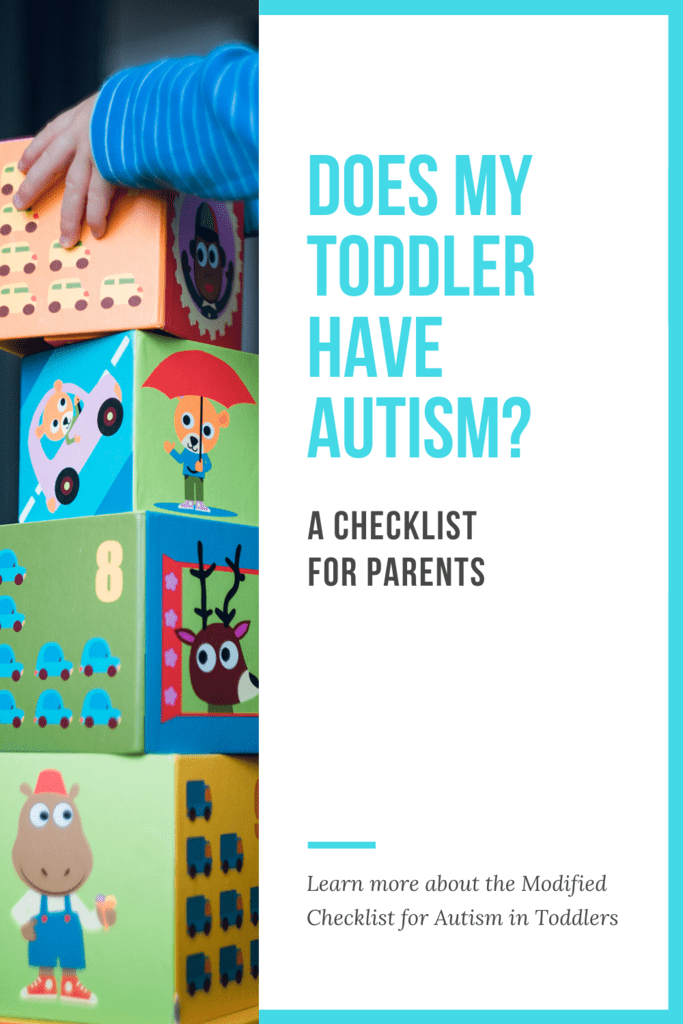
Does My Toddler Have Autism? (A Checklist for Parents)

Lots of parents have asked or even wondered, “Does my toddler have autism?” Thankfully there are wonderful resources that can give you further information about whether or not your child may have autism.


Does My Toddler Have Autism Resources

When our children are struggling or displaying puzzling behavior it can be alarming. However, it can sometimes also be tempting to simply brush it off as a phase that they’ll grow out of. While this may be true in some cases, addressing these concerns head-on can be a much more effective route to take! Below are websites that offer insight into a variety of concerns and solutions from parents who have been there.


Autism Speaks

Autism Speaks has a checklist on their website that is a wonderful resource. You can access the Modified Checklist for Autism in Toddlers, Revised (M-CHAT-R™) here: https://www.autismspeaks.org/what-autism/diagnosis/mchat


Autism Parenting Magazine

Check out Autism Parenting Magazine for additional information and helpful resources, like this article: https://www.autismparentingmagazine.com/signs-of-autism-in-girls/


Adore Them Parenting

Explore an entire collection of advice from parents, teachers, and health professionals that share on a variety of Special Need topics.


For more on this topic, check out the full Mental Health collection

does my toddler have autism_ (1)

Filed Under: Autism Awareness, Mental Health, Special Needs

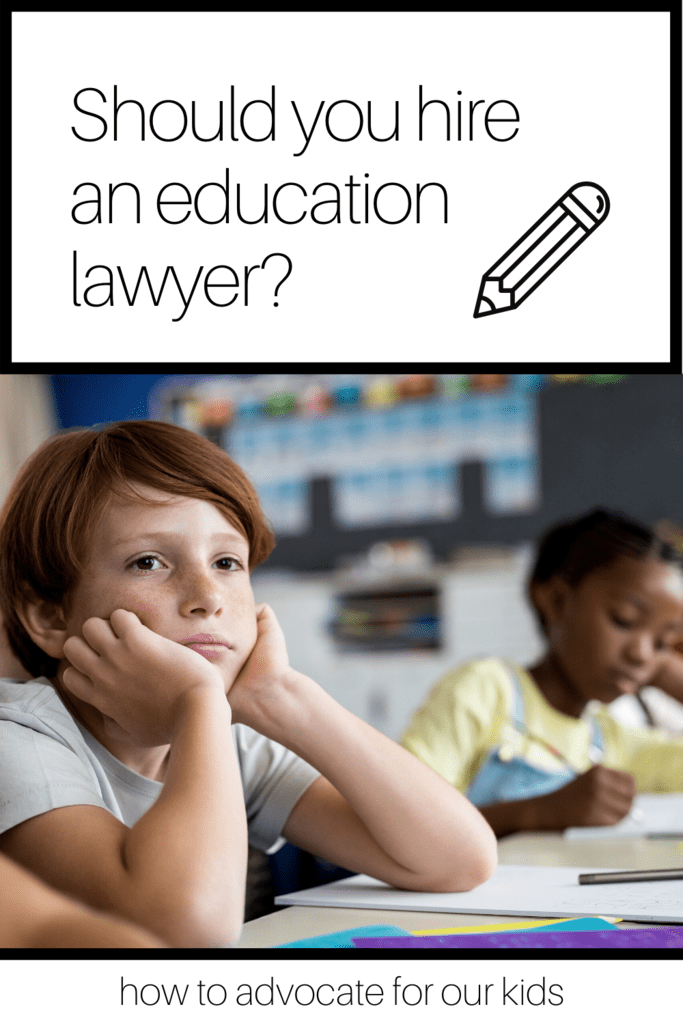
Should You Hire an Education Lawyer? How to Advocate for Our Kids

Should you hire an education lawyer

Should you hire an education lawyer?

Nobody relishes the thought of having to hire a lawyer to go up against the education department at the local level. But unfortunately, there are times when it might be a necessity. If you’re thinking that you might need an education lawyer, obviously things have escalated to the point where you’ve reached your wits’ end when it comes to a serious issue relating to your child. In these cases, where you’re feeling protective, the school is defensive, and your child might possibly be hurt or being treated unfairly; you need someone unbiased to come in and protect your child’s rights. Continue reading below for more insight!


For more on this topic, check out the full Mental Health and Back to School collections


Be Proactive with Your Child’s Education

No one knows your child like you do. And, no one will fight for them like you will. That can feel a bit overwhelming, but it is also empowering! I have two children that each have an IEP for a different reason, and for a specific area of learning. Whenever I go into a school meeting, I walk in telling myself that I have two goals. The first is that I will not leave this meeting without conveying how my child is feeling. The second goal is that I will not leave this meeting without an adjustment to their IEP that I know will help. Sometimes this means that another accommodation needs to be added. And sometimes this means that an accommodation needs to be lessened or removed in order to give my child the sense of accomplishment and confidence for moving forward.


Prepare for School Meetings

My number one tip before any school meeting is to have a long heart to heart with your child. I explain to them that I am not in the classroom. Even though I know what should be happening, I am not in there to see it in action day in and day out. So I need to hear from them what is helping, what is not working, and how it makes them feel. Ask very detailed questions about everything your child mentions. And then, together, come up with an ideal plan for going forward.

Because my daughter is dyslexic, she has special reading accommodations to help her focus for testing. And she receives small group support when working through multi-step assignments. Over the years we have changed her testing accommodations to include a teacher reading her the questions, taking the test in a separate room with no interruptions, to now taking her tests in the back of the room next to the teacher. She has improved so much! And we want to recognize that and support her becoming more independent! So now she can stay in the classroom with her main teacher, but they are still nearby if she has a question. They even check in on her throughout the testing to be sure she is understanding everything, and completing the assignment correctly.


Listen to the Teachers

While I prepare for each meeting by talking to my daughter, I still walk into each meeting with the ability to listen. My goal is to help my daughter succeed. And while she might know what she wants, the teachers also might have some additional insight to consider. I was surprised to see my daughter jump from a below average reader, into the above average range, in less than a year! I had no idea she was improving that quickly (thanks to her accommodations and wonderful support)! At home she was telling me what help she still wanted. But while in the meeting, the teachers recommended giving her a little more independence.

But my first goal of conveying how my daughter is feeling, and having just had the long conversation the night prior, I was able to explain what my shy child is feeling inside – which I believe matters more than any grade! So while she was improving, we all agreed that we needed to keep that strong support system for her in order to continue with her progress. In the end we made a few minor adjustments to give her a small push. But we kept majority of her IEP the same. And after checking in with her daily over the next few weeks, we all agreed that we had made just the right amount of adjustments for her success.

Check out this helpful guide to choosing after school activities


When Do You Need an Education Lawyer?

Unfortunately you will not always be able to work it out in a simple meeting. Sometimes you need to ask for an entire team meeting. This might include your child’s teacher, their special area teachers, their resource teacher, the principal, the school guidance counselor, the school psychologist, and whoever else might come into contact with your child. I have been there. It is intimidating. But sometimes gathering everyone together in the same room, and at the same time, needs to happen so that everyone can be on the same page.

But what do you do if the issues still are not resolved? You might need to consider calling an Advocate or hiring an Education Lawyer to help mediate the situation.


Concerning Scenarios to Watch For

Some of the scenarios in which you might find yourself needing an education lawyer are in the cases of a special needs child whose IEP isn’t being met. Or, perhaps you have a child who is facing discrimination, or abuse at the hands of someone at school. If you feel that your child isn’t receiving the proper support or curriculum that is their right according to their IEP, you then have the right to call for a meeting, or even call for additional help.

If your child has been mistreated or harassed by a member of school staff, or is being bullied and the school administration hasn’t addressed the problem, you need to make sure it is properly addressed. Perhaps you feel that your child has been unfairly disciplined. Or your child was injured at school due to negligence or some other school-related problem, than you need to have that investigated.

And if you feel that your child is not progressing at the rate they should be, and/or is failing as a direct result of school negligence, don’t ignore that. If you’ve seen policies and/or curriculum that give you cause for concern, speak up. These are just a few examples. However, there are any more reasons that warrant concern, and why you might need to contact an education lawyer for guidance.


Know Your Rights

The important thing is that you know your rights. Know that you have the right to ask for help. Expecting a safe supportive environment for your child is not too much to ask for – that is your child’s right as a student. Maybe you can get the changes needed on your own in a school meeting. Or maybe you need an expert to help facilitate the adjustments. Either way, be that proactive voice for your child. Because if you don’t start the process, it’s likely that no one else will. Good luck! Remember that there are experts out there who are available and willing to help you through this process! And once you start seeing your child improve and succeed, it will make all of this totally worth it!


For more on this topic, check out the full Mental Health and Back to School collections

Should you hire an education lawyer

Filed Under: Education Options, Mental Health, Special Needs

3-Ingredient Flourless Peanut Butter Cookies

peanut butter cookies

These easy to make, gluten-free, and sugar-free peanut butter cookies are perfect for any occasion, or an everyday snack. To vary the flavor, try mixing 1/2 cup dried fruit, nuts, or chocolate chips into the batter. Scroll down to learn how to make these flourless peanut butter cookies….

Read More

Filed Under: Autism Awareness, Mental Health, Recipes, Special Needs

Free Activity Book for Children with Autism – “I Have Autism”

Free Activity Book for Children with AutismI originally wrote this story when I was working with children with autism. I designed it to be part social story, part activity book. This book is a printable so that you can work with your child to illustrate this book and really make it their own. Below is our free activity book for children with autism.
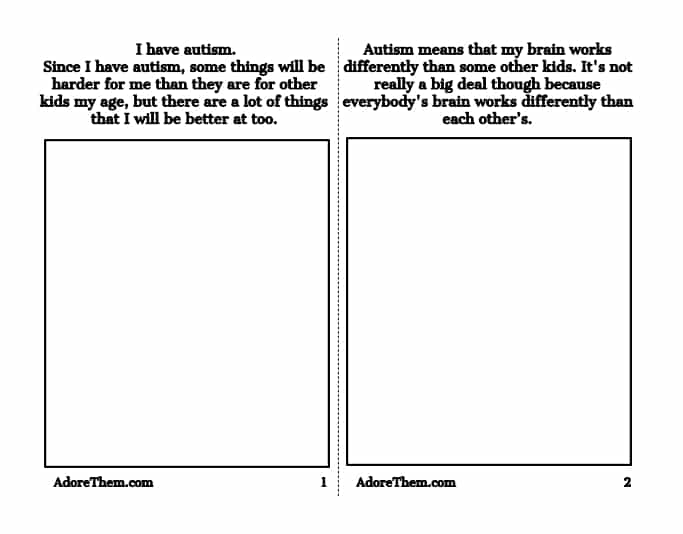
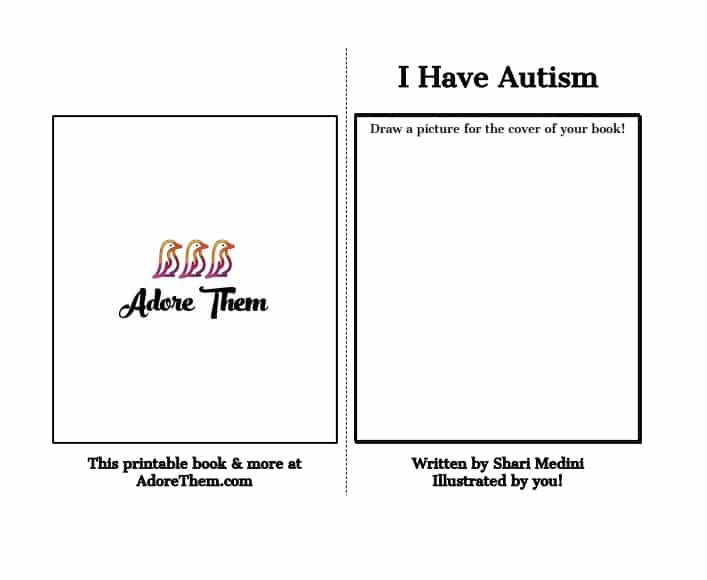
Free Activity Book for Children with Autism

For more on this topic, check out the full Mental Health collection

Steps for Activity Book

To create your free activity book, follow the steps below…

1: Click below to download your book.

2: Fold each page on the dotted line with the text facing out.

3: Trim the excess paper at the edge.

4: Set the cover aside. Arrange the other pages in order (beginning to end).

5: Put all of the pages inside the cover (they will be facing the opposite way).

6: Staple the book along the edge.

7: Read through the book and have your child draw their own illustrations 🙂


i have autism printable book


Here is a free Checklist to Help Families Living with SPD  and check out  How to Find Balance as a Special Needs Family

For more on this topic, check out the full Mental Health collection

Free Activity Book for Children with Autism

i have autism printable book

Filed Under: Autism Awareness, Free Printables, Mental Health, Special Needs

Family Conversation Starters – Early Intervention

We hear all the time how important it is to open up the lines of communication. Communication improves relationships with partners, friends, and coworkers; but we can’t forget that it also improves our relationships with our children.

Taking the time to have a genuine conversation with your child can be so much fun and so insightful! It also helps to build up a great family bond, which is why we are offering a few family conversation starters to go a long with each curated collection of content….

Read More

Filed Under: Early Intervention, Mental Health, Special Needs

Autism: Rule #1

Autism Rule #1

In all honesty, there really are a lot of things to know and learn about autism. Clearly, after more than a decade of navigating the autism learning process, I will freely admit, I’m still learning. Lately though, as my boy is getting older, there are things I wish I’d known sooner, done differently.  The one piece I wish I’d learned first in our journey is something I’ve come to see as the first rule of autism and the prevailing smart point. Of all things autism, this is the one I wish I’d internalized in those very earliest moments. Continue reading below to learn the Autism: Rule #1….

Read More

Filed Under: Autism Awareness, Mental Health, Special Needs

Feeling Safe is The End Game – How to help an Anxious Child

how to help an anxious childBeing the mom of an anxious child is life changing! It changes the lens through which you read any parenting situation. It changes the tone of your voice; the ability to be spontaneous (ok, parenting in general orders a ceases and desist letter there); and it seriously changes your family dynamics. Changing doesn’t mean worse however. Well, yes it does sometimes. But it can also open your heart and enrich your brain as you struggle to learn new approaches to ordinary things. Continue reading below to learn how to help an anxious child feel safe again.

…

Read More

Filed Under: Child Behavior, Mental Health, Special Needs

Autism: The Shaky Bridge To Hope After Receiving an Autism Diagnosis

receiving an autism diagnosisWhen parents are first given the diagnosis of autism, they are immediately swamped with questions that begin to lead them on their quest for answers throughout their journey. It can feel like a daunting task. But as you search for answers, there are a few things to keep in mind when receiving an autism diagnosis.…

Read More

Filed Under: Autism Awareness, Mental Health, Special Needs

Traits and Symptoms of SPD

SPD Symptoms

According to WebMD.com, “Sensory Processing Disorder is a condition in which the brain has trouble receiving and responding to information that comes in through the senses.” I have read studies that say anywhere from 1 in 20 kids, to as many as 1-6 kids, struggle with SPD. But no matter the correct number, it seems to be growing. Whether by diagnosis or by educating parents to have their children tested, it seems SPD affects a lot of people around us. Continue reading below for an in-depth look into the symptoms of SPD….

Read More

Filed Under: Early Intervention, Mental Health, Special Needs

  • « Go to Previous Page
  • Page 1
  • Page 2
  • Page 3
  • Go to Next Page »

Copyright© 2026 · Brunch Pro Theme by Shay Bocks

We use cookies on our website to give you the most relevant experience by remembering your preferences and repeat visits. By clicking “Accept”, you consent to the use of ALL the cookies.
Cookie settingsCLOSE and ACCEPT
Manage consent

Privacy Overview

This website uses cookies to improve your experience while you navigate through the website. Out of these, the cookies that are categorized as necessary are stored on your browser as they are essential for the working of basic functionalities of the website. We also use third-party cookies that help us analyze and understand how you use this website. These cookies will be stored in your browser only with your consent. You also have the option to opt-out of these cookies. But opting out of some of these cookies may affect your browsing experience.
Necessary
Always Enabled
Necessary cookies are absolutely essential for the website to function properly. This category only includes cookies that ensures basic functionalities and security features of the website. These cookies do not store any personal information.
Non-necessary
Any cookies that may not be particularly necessary for the website to function and is used specifically to collect user personal data via analytics, ads, other embedded contents are termed as non-necessary cookies. It is mandatory to procure user consent prior to running these cookies on your website.
SAVE & ACCEPT