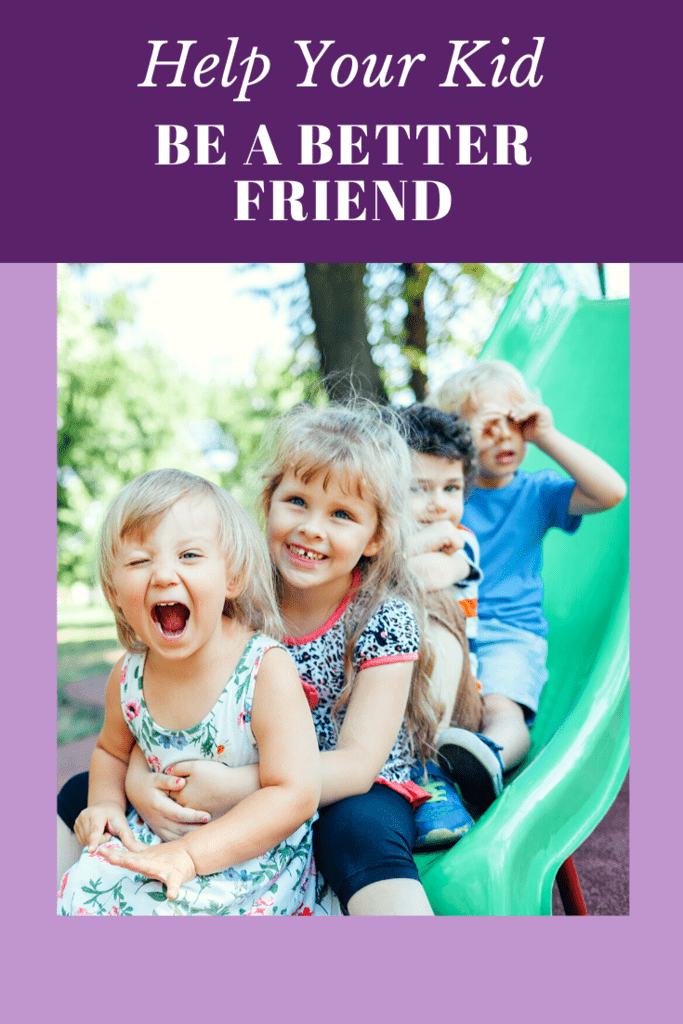
I often get frustrated when taking to other parents or teachers about children’s education, as so much of the discourse revolves around ‘academic’ and ‘school’ learning. It’s great that our kids can learn about science with STEM toys before they’re potty trained. However, no one ever seems to talk about helping children to develop truthfulness, a sense of justice, or empathy. By teaching kids empathy you can make them a better friend, better brother, better sister, and help them connect to others in a more authentic way; which is what the world needs.
This article is written by Matt Morrisey
For more on this topic, check out the full Friendships collection
Continue reading this article below, or click play to listen to this article being read to you!
Children need to learn moral behavior and principles just as much as numbers and letters. A strong sense of empathy will be one of the cornerstones of a caring, responsible, and kind adult. However, just like maths and science, a child’s potential for empathy needs to be nurtured and encouraged. Science has even shown that there are specific parts of the brain that deal with empathy and that compassion can be trained. So lets get the training started immediately with a few ideas to encourage empathy in children.
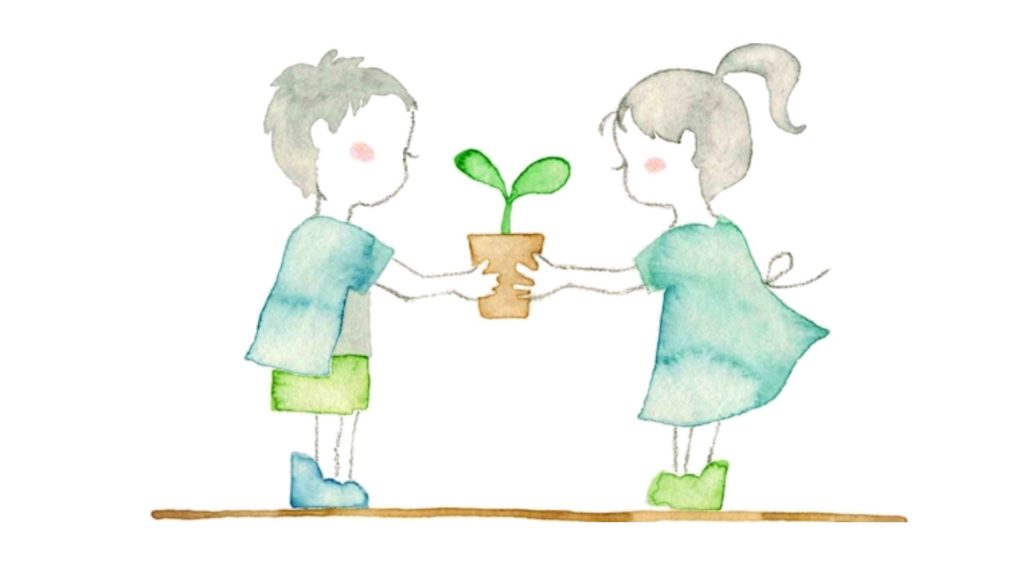
Teach Kids words that describe emotions
To appreciate empathy, your little one needs to understand what emotions are and have a vocabulary to express them. This can begin with very simple everyday conversations about how they or you are feeling:
- “I can see that you are disappointed because we can’t go to the park today.”
- “Are you excited that grandpa is coming to stay for the week?”
- “I’m frustrated because the bad traffic made me get home from work late. It makes me sad because I have less time to spend with you.”
Scientific research has shown that understanding emotions, and knowing the words to describe them, helps people to control themselves and makes them less likely to hurt others. Therefore, helping your child to understand how they and others feel, and giving them the words to express these feelings, will be an important first step in teaching kids empathy.
Help Children ‘read’ faces
According to psychological studies, the ability to ‘read’ emotions in faces is an important part of developing empathy. However, younger children and toddlers often find it difficult to recognize people’s facial expressions. This then can make it hard to empathize.
Playing simple games with children such as picking out the feelings in the picture below, or acting out emotions with them in role play, will help them learn to recognize facial expressions. This is a key tool they need for empathic behavior.
Praise and encourage empathic behavior in Kids
When you see your child showing empathy, praise this behavior. And make it clear that they understand why you are doing so. For example:
“It was very kind of you to let your little sister play with your trucks today. She was upset, and you really cheered her up.”
This way, you can positively reinforce this kind of good behavior and encourage them to continue. Please be aware, though, that studies have shown that rewarding good behavior with presents or money actually makes children less likely to be helpful or generous. So keep it genuine when teaching kids about empathy.
Discuss TV shows and books
Discussing other’s emotions will contribute a lot to their emotional development. For example, every good kid’s book will have characters showing emotions in the story. As you read with your child, ask them simple questions like “How does the rabbit feel here?” and “Why do you think he feels that way?”.
These discussions can then move into real life examples and you can talk about things that happen at nursery or pre-school. It will also help your child think about how others feel, and how their actions can affect them.
Teaching Kids Empathy, respect, and tolerance for all
Studies have shown that humans in general are much more likely to empathize with those they feel familiar with or connected to. Therefore, as a parent, you need to teach your child to respect others, and help them to understand how their actions can make others feel happy or sad. Teaching children to have respect for the elderly, men, women, different religions, and ethnic groups is crucial. Help them look for the similarities between all of us. This will help them to show empathy and compassion for all. Focus on what unites us, not on what separates us.
Be a role model for empathy
“Children have never been very good at listening to their elders, but they have never failed to imitate them.” — James Baldwin
Children learn through imitation, consciously and unconsciously, and genuinely demonstrating empathy, tolerance and care for other’s well-being will set the strongest foundation for your child.
However, parents who preach empathy, but are argumentative and intolerant with each other and the family, will only confuse their children. Worse still, the children’s natural tendency to imitate their parent’s behavior can easily win over following what their parents say. So don’t underestimate the impact of the example you set by teaching your kids empathy.
By Teaching Kids Empathy, they can learn to become a better friend
Teaching your kids about empathy can make them a better friend, better sibling and a better child. This will help them realize the change that we all want to see in the world. Consider some of these opportunities to practice empathy for deep connection and friendship:
- Listening is often second rated and over looked, but here is where the learning takes place.
- You can show them that by asking if everything is ok – will help to make things better.
- By paying attention to the change of mood in another person, often allows a place for connection.
- Don’t judge a friend poorly, otherwise you will soon be the one that’s judged.
“Never look down on anybody unless you’re helping him up.” – Jesse Jackson
Links for Further Reading
https://www.parentingscience.com/helpful-kids-and-rewards.html
https://www.parentingscience.com/facial-expressions-for-kids.html
https://www.psychologytoday.com/blog/the-athletes-way/201310/the-neuroscience-empathy
For more on this topic, check out the full Friendships collection
 Featured Contributor: Matt Morrisey
At BuzzParent I review kids toys, games and products to help parents find better buys for their little ones. I help give advice in areas that we feel can benefit both parent and child, so you will find articles ranging and varying in topic, from parenting tips to latest tech toys. I love my gadget toys.
- Website: buzzparent.com
- Facebook: @BuzzParent
- Twitter: @Buzzparentcom