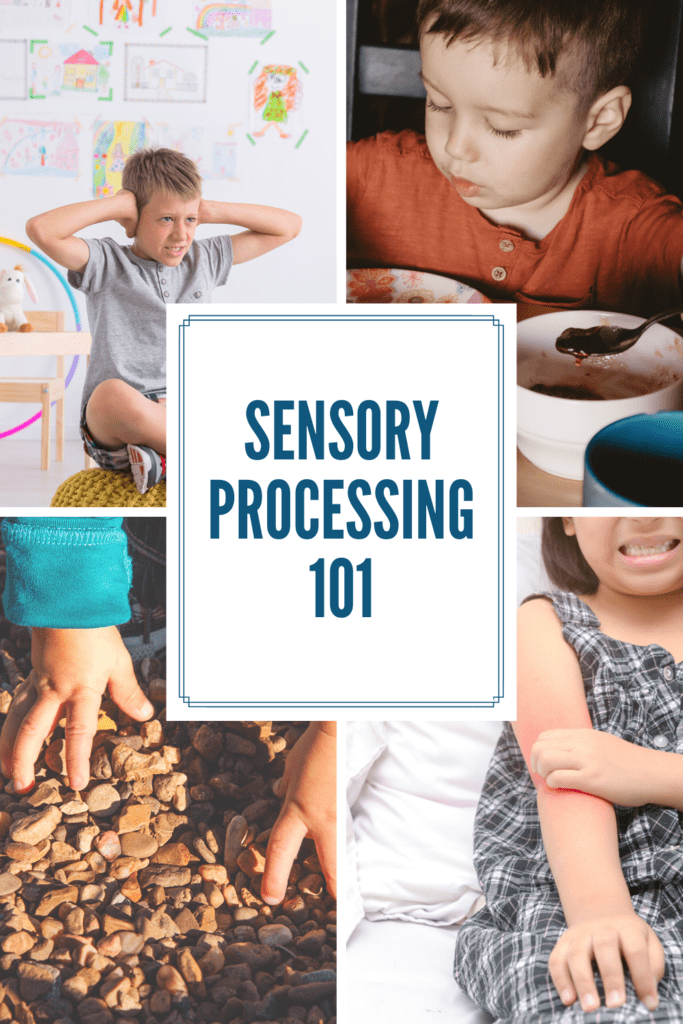
A typical morning in my home begins with the words “My clothes hurt me. They are too loose. I need new clothes.” As a result, I begin the search for the “right” clothes for my 4 year old daughter. After much time, many tears, lots of tight hugs, and a good dose of frustration; she begins her day in the same dress she wore the day prior, and many days prior to that. The process of getting dressed, which seems simple to most, is the biggest challenge my child faces on a daily basis. This is because she has a sensory processing disorder. Read below to get the scoop on Sensory Processing 101, discover what your child is actually feeling, and learn how you can help your child better cope.
This article is written by Sarah Lyons
For more on this topic, check out the full Mental Health collection
What does Sensory Processing feel like?
The situation above is one example of what living with a child with Sensory Processing Disorder is like.
Imagine being in an environment where the noise around you is amplified to the highest level, the temperature is the coldest or hottest you have ever felt, you are wearing the most uncomfortable clothing that has ever touched your skin, and you are nauseated by a repulsive smell. All at the same time. What would be your response? Most would quickly escape the situation. These are examples of what a child with Sensory Processing Disorder feels, but they cannot escape the symptoms. As a result, these children may respond with anger, frustration, or ultimately avoid situations which may cause a breakdown.”
~ Dana Lyons, Occupational Therapist at Boulder City Hospital
What is Sensory Processing Disorder?
Sensory Processing is a term that refers to the way the nervous system receives messages from the senses and turns them into appropriate motor and behavioral responses. (spdfoundation.net).
“Everyone processes sensory input, but some people process it differently than others. When the processing of this information interferes with our ability to function on a day-to-day basis is when we have a problem.” – says Carrie Grosdidier, Occupational Therapist.
Sensory Processing Disorder (SPD) can be hard to diagnose because it affects each person differently.
“Any of the five senses can be affected by being hypersensitive (overstimulated) or by being hyposensitive (under simulated).” – says Lyons.
What is the Difference between Hypersensitive and Hyposensitive?
A hypersensitive response to sensory input may include:
- Distracted by noises that sound normal to others (flushing toilets, clanking silverware)
- Fear of surprise touch or avoid hugs
- Avoids swings and playground equipment that others enjoy
- Has poor balance, falls often
A hyposensitive response to sensory input may include:
- A constant need to touch people or textures
- An extremely high tolerance to pain
- May often harm other children and/or pets when playing, doesn’t understand own strength
- Fidgety and unable to sit still, enjoys movement based play such as spinning, jumping, swinging etc.
- Seems to be a “thrill seeker” and can be dangerous at times (brainbalancenters.com)
What Does Sensory Processing Disorder Look Like?
Children can have one or many of these characteristics as well as some from each category and in varying degrees of severity. “Unfortunately, these responses are viewed by others as children behaving badly when in fact they are not.” Lyons says. “The most important thing to understand is that children with SPD are not “bad” children. They are simply trying to survive in their own skin, in a world with heightened or lowered sensations. Typical punishment for “bad” behavior is not optimal and can cause regression rather than progression.”
Stephanie Beaudry, mom of two children with SPD, says “When trying to explain my son’s hyperactivity or clumsiness is due to SPD, we get told ‘Oh it’s just his age’ but it’s actually because his nervous system doesn’t respond as it should in certain situations.” SPD may cause motor clumsiness, behavioral problems, anxiety, depression, or other impacts if not treated effectively.
Learn more about SPD Symptoms and Resources here
How to Handle SPD as a Family
Sensory Processing does create challenges for families, but there is treatment available for kids who struggle with it. “We had a fabulous Occupational Therapist that helped my son. She gave us tools and gave him permission to figure out what worked for him and what didn’t.” says Joy Alsup, mom of four. “He has a high need for tight, long hugs and we understand that this is what helps him. It’s a huge priority for us.”
With the help of an Occupational Therapist kids with SPD can find tools that help them balance sensory input. Activities may include swinging, wearing a weighted vest, pushing or pulling heavy objects across the room, or jumping on a trampoline. Many of these activities are fun for the child and can be integrated into playtime at home. (sensorysmarts.com)
“The therapy helps more than just their physical strengths but also their emotional strengths.” says Beaudry. “When my daughter first started therapy, she was extremely shy. She wouldn’t even talk to children her own age when they approached her. Now, four months later, she is a social butterfly.”
Here is a free Checklist to Help Families Living with SPD and check out How to Find Balance as a Special Needs Family
Occupational Therapy for SPD
An occupational therapist’s main goal is to educate parents about SPD and give families tools they can use to help the child progress at home. Although families that deal with SPD may have struggles with things other people see as “normal” activities, many parents find hope in their child’s progress and support from other parents dealing with this disorder. “One thing I have learned after experiencing our journey is that I am not alone. There are so many others that understand what I am going through and we are there to support each other in many ways.” says Beaudry.
Find out When You Should Seek Out a Pediatric Social Worker
Sensory Processing 101
As a mother of a child with Sensory Processing Disorder myself, I would encourage others to educate themselves about SPD and begin to approach the situation from the child’s perspective. Parents can then begin to use the tools needed to adjust their environment and celebrate as their child meets their goals and overcome challenges.
Joy Alsup says “When my son was diagnosed, I felt like he would be limited in his future. He has worked through many of his issues and I see his SPD as part of what makes him unique. I wouldn’t have him any other way.”
It takes a lot of patience, persistence, and love to parent a child with SPD, but when a child feels acceptance and supported, they can work through their struggles, and thrive in school and at home.
For more on this topic, check out the full Mental Health collection
 Featured Contributor: Sarah Lyons
Sarah Lyons is a mom of six kids, including three-year-old triplets. She loves cooking, being outdoors, and reading mysteries. She lives in the Kansas City area with her family.
- Website: sarahlyonswriter.blogspot.com
- Facebook: @SarahLyonsWriter