 Hello, fellow parent-warriors! Today, let’s embark on a slightly unconventional, somewhat hilarious, and profoundly heartwarming journey into the world of parenting – specifically, parenting kids with diverse needs. Because, let’s face it, ‘normal’ is just a setting on the dryer, and our kids are wonderfully complex puzzles that didn’t come with a picture on the box.
First off, let’s address the elephant in the room – or rather, the label. You know, those sticky, hard-to-peel-off things that seem to adhere to our kids the moment someone decides they’re a little different? Yeah, those. In our house, we toss those labels out faster than last week’s mystery leftovers. Our motto? “Labels are for jars, not for kids.”
So, how do we create a home that’s more like a cozy, welcoming den and less like a scene out of a ‘perfect parenting’ magazine (which, by the way, is as real as a unicorn with a WiFi hotspot)? Let’s dive in, shall we?
For more on this topic, check out the full Child Behavior collection
1. The Great Wall of Empathy
Your house needs an invisible, yet unbreakable, wall of empathy. This doesn’t mean you have to cry every time your little one scrapes a knee (though if you do, more power to you). It means understanding that every meltdown isn’t a rebellion. Sometimes, it’s just their way of saying, “I’m overwhelmed, and I don’t have the words to tell you.” Remember, if empathy was easy, everyone would be doing it, and reality TV wouldn’t exist.
2. The Art of the ‘Flexible’ Routine
Kids thrive on routine, they say. True, but when you have a child with special needs, you quickly learn that flexibility is your new best friend.
Navigating the world with a special needs kiddo, especially a kiddo wearing hearing aids, is like being a DJ at a disco—always ready to change the tune to keep the party hopping! Flexibility in routine? It’s the secret sauce. It’s a juggling act, sure, but when you see your little one navigate their world with more ease and less fuss, you’ll feel like you’ve just nailed the moonwalk on the first try. Flexibility isn’t just a strategy; it’s an art form where, every day, you paint a new, quirky masterpiece of family life.

3. The School of ‘Life Skills’
In our inclusive homes, we have a unique curriculum. It includes lessons like ‘How to Explain to Your Friends Why Your Sister Wears Special Glasses’ and ‘Advanced Studies in Patience When Your Brother Needs More Time.’ These aren’t just skills for the kids; they’re life lessons for all of us. Plus, they come with unlimited free hugs – the best kind of reward.
4. Celebrate the ‘Small’ Victories
In a world obsessed with milestones and achievements, we celebrate the ‘small’ stuff. Like the first time they tied their shoelaces or the day they finally said, “I can do it myself.” These moments? They’re our Oscars, our Olympic gold medals.
5. The No-Judgment Zone
Finally, and most importantly, our homes should be a no-judgment zone. Here, it’s okay to be different, to learn differently, to play differently. Because different doesn’t mean less – it just means ‘different.’ Like how a pizza is different from a hamburger. Both are delicious; they’re just not the same.
Conclusion to an Inclusive Home Environment for Children with Diverse Needs
So, dear reader, as we wrap up this little escapade into the heart of inclusive parenting, remember this: You’re not just raising kids; you’re raising wonderfully unique individuals. And while the journey might be sprinkled with a bit more chaos and a few extra challenges, it’s also filled with immeasurable joy, laughter, and love.
Here’s to embracing the beautiful, unpredictable, and absolutely amazing journey of parenting children with diverse needs. Cheers, and don’t forget to hide the labels – maybe with those mystery leftovers.
For more on this topic, check out the full Child Behavior collection
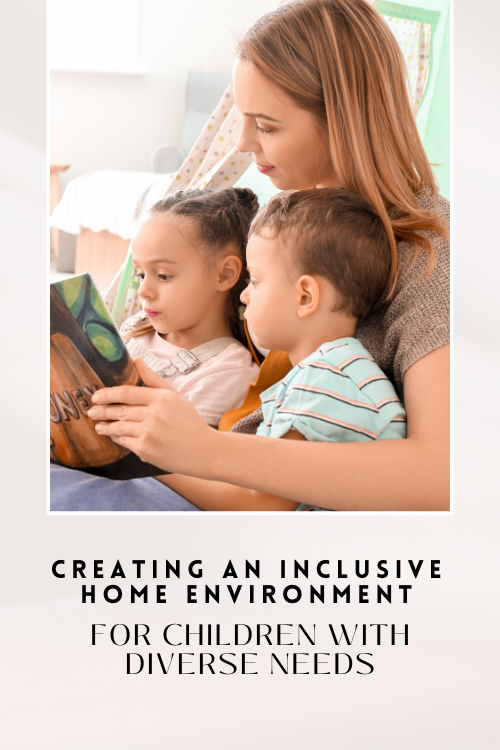
 Parenting is a journey filled with awe, challenges, and the joy of witnessing your child’s growth. One of the most crucial aspects of this journey is fostering early childhood learning. The first few years of a child’s life lay the foundation for their future cognitive, emotional, and social development. As parents, it is our responsibility to create an environment that stimulates curiosity, encourages exploration, and nurtures a love for learning. In this article, we delve into three key areas that play a pivotal role in shaping a child’s early learning experiences.


 Planning a family vacation to Hawaii is an exciting venture, promising sun-soaked beaches, vibrant culture, and unforgettable memories. However, before you hit the “book now” button, there are crucial aspects you should consider to ensure a smooth and enjoyable experience for everyone. So, here are some of the essentials to help you make informed decisions for your family’s Hawaiian getaway.


 Having healthy skin is essential; not only does it make us look our best, but also helps protect us from a host of potential hazards. But the biggest threat to our well-being comes in the form of something we cannot control: The sun. However, if you take certain precautions while out in the sun, you can ensure that your skin stays safe and sheltered for years to come – and this is exactly what I am focusing on today with my how-to guide on protecting your skin from the sun! With tips ranging from keeping sunscreen handy at all times to avoiding overexposure to sunlight, you are sure to leave feeling better prepared against threats like ultraviolet radiation and more! So read on, arm yourself with knowledge – and most importantly– enjoy your time outdoors responsibly!


 If you and your family are ready to explore, play, and fall in love with a world filled with excitement, you’ve come to the perfect spot. We’ve scoured the globe to find the best family-friendly destinations that will leave you with unforgettable memories. So, come along on our virtual tour of these locations, which range from the untamed landscapes of South Africa to the historic treasures of Peru.










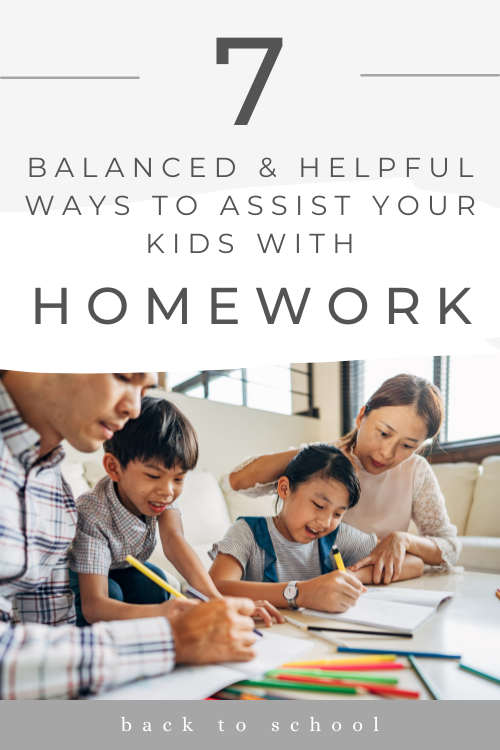
 In almost every household with a student, the homework struggle is real. After a long day, your child may come home with a backpack brimming with homework. And you may be tempted to provide them with quick answers and ensure they get the best scores. But there’s a significant difference between completing assignments for your child (effectively cheating) and actively engaging in their learning process.

 Addiction is a complex and challenging condition that affects millions of individuals worldwide. Whether it be substance abuse or behavioral addictions, seeking treatment is a crucial step towards your recovery.