• Skip to main content

Adore Them Parenting

Practical Positive Parenting Advice and Resources

Practical Positive Parenting

Go here for our book!

  • About Us
  • Our Book
  • Parenting Advice
    • Raising Children
    • Family Life
    • Seasonal
    • View All Topics
  • Free Printables
  • In the Media
  • Shop

Karissa Tunis

Why Is It Important To Take Care Of Our Eyes?

The eyes are the most important sense organ, as up to 80% of all impressions are perceived by sight. Loss of eyesight will therefore have a major effect on our overall functioning and quality of life. Areas of our lives affected by reduced vision will be everything from daily activities like taking out the trash, to driving a car, and performing our occupation. It is also interesting to note that very few people can perform their normal job without their sight. Keep reading below to learn why it is important to take care of our eyes.


For more on this topic, check out the full Staying Healthy collection


Why Is It Important To Take Care Of Our Eyes

So, Why Is It Important To Take Care Of Our Eyes?

Of all the senses, our eyes best protect us from danger. Our peripheral vision warns us of anything coming our way. Whether we are walking or driving, eyesight is important! And our vision also keep us from walking into door frames or stumbling over things on the ground. Not having the best eyesight can clearly puts us in danger every day.

Many things can cause a loss of sight. Regular eye deterioration can often be rectified by operations or spectacles. Many other causes of sight loss or partial loss of sight can not be easily treated so taking care of our eyes is important. Our eyes are also one of the most fragile organs. Just think how easy it is to damage an eye versus most other parts of our bodies. The eye is an amazingly specialized optical sensor. This complexity also makes your eyes quite vulnerable. That is why good eye care should be taught from a young age. Certain physical damage to young eyes can severely affect the learning and developmental processes of a young child.

[Read: How Can You Take Care of Your Family’s Health?]


Different Ways of Taking Care of Our Eyes

Sunglasses

Wearing quality sunglasses when outside will help protect your eyes. Make sure you buy sunglasses that block harmful UV light from the sun. Blocking harmful UV light is a proven way to protect your eyes. Check the UV rating of sunglasses before you buy.


Protective Glasses

Wearing protective glasses in potentially harmful situations is key to protecting your eyes from foreign objects. Good quality sunglasses will also protect you from debris like dust and small objects when running or cycling. Check the impact rating of any sport-specific glasses. You can also get clear or almost clear glasses for cycling and running in low-light conditions.

Protective glasses are also needed when working in potentially hazardous environments. Factories, mines, and many other environments can cause potential damage to your eyes. There are many good quality protective glasses specifically designed for these environments to protect your eyes.

Why Is It Important To Take Care Of Our Eyes

Regular Eye Exams

Regular eye exams will include testing and screening for many degenerative eye conditions. They are also meant to pick up on any developing issues. It is important to have regular eye exams to pick up on any issues as early as possible. Eye problems are most treatable when they are picked up early. Deterioration of eyes can also be an indication of other underlying conditions that might need treatment like diabetes.

If you wear glasses or have a family history of eye problems you should have eye exams more often than younger healthy people with no eye issues. Also, remember to take your current prescription glasses with you when you go for an eye exam.


Supplements

Some supplements have been proven to be effective to help maintain healthy eyesight. Speak to your healthcare provider or dietician to find out more about these. Supplements that could help with eyesight include various vitamins, zinc, omega-3, and carotenoids. While supplements might not be effective against specific eye diseases, they can help with overall eye health and might slow normal degeneration with age.


Not Straining Your Eyes

The best way to alleviate strain or your eyes is regular breaks. If you spend long periods looking at screens or books it is a good idea to take regular breaks. Go for a short walk to give your eyes a chance to look at objects further away. Getting enough sleep will also help.

Having the correct prescription glasses is another way to alleviate eye strain. If you wear glasses make sure you have your eyes tested regularly. Also, evaluate the light in your workspace to be sure you have correct and ample luminance. If you are reading or working with small objects good lighting will help your eyes to strain less.


Eye Care is Crucial

Make sure to look after your eyes as they are an immensely important part of our daily functioning. If you have any doubts about your eye health immediately go see a professional. Make sure to also teach young people to look after their eyes. Learning all the ways to look after our eyes will pay off if these habits are formed from a young age.

For more on this topic, check out the full Staying Healthy collection
Filed Under: Staying Healthy

Choosing Good Books For Kids Is Important For Their Growth

We all want the best for our children’s education. And we all know that it starts at a young age. Certainly, many of us have thought about how far our children can go, and the possibility of them becoming very successful. Perhaps you are looking at private schools for their future. In this instance, you know your child is receiving impeccable education. However, it is still important to nurture this at home. Reading is one great way to do this. Continue reading below to learn why choosing good books for kids is important for their growth.


For more on this topic, check out the full Summer Learning collection


Choosing Good Books

One of the main goals of reading books is pure enjoyment. When your child discovers new interests or their favorite genres; a love for books is created, and a hobby develops around reading. A child who loves books will read a lot. And by reading a lot, he or she will have more chances of getting to know good books (along with less good books). The encounter with a book invites identification with characters and situations. This also helps to form an identity and deal with emotions. The idea is to help your children fall in love with books over time, so don’t stress if they are not into the first book they pick up. It will take encouragement and lots of time exploring.

[ Read: How to Make a Book Nook for Kids – Cozy DIY Idea ]


Consider Your Child’s Age

Toddlers less than six months old will be content with simple books about objects they know from life that are accompanied by large pictures and illustrations with different textures. The number of words per page will increase with age. Choosing books for older children is more difficult because in this case questions are added that complicate the filtering. Questions like the moral of the book. The use of language, And the complexity of the plot should all be considered based on the age and maturity of your child.

Parents love to buy and receive books for their children, and it is so fun to create your own library at home! However, sometimes we discover that our children become uninspired or lose their interest for what is on the shelves. Perhaps a few new books will improve the situation. A trip to the library might spark some new interest. Could you create a new reading nook, or encourage them to read somewhere different – like outside on a hammock? Just like we can become bored with the same content and same space, we need to make sure we are mixing it up for our children as well.

[ Read: Create a Kid Friendly Home Library (and why it’s so important!) ]


Encourage Reading Printables

5 FREE Printablesto Encourage Reading


What to Look For When Choosing A Book

Language

Linguistic richness in books refers not only to vocabulary, but also to the variety of writing. A rich text is one in which you can find many images, phrases and puns. It is worthwhile to make sure that books whose writing language is rich and complex is suitable for the age of the reader and/or listener. Language that is too complicated will slow the reader and confuse them, causing the child to lose interest.

Rhyme

Reading rhymes is not mandatory. But a good rhythm can help children recognize the structure of words and sentences in language.

Plot

Imagine the pages of the book like a train whose carriages must have a connection – this is the plot. It should be made up of parts that have meaning in relation to what preceded them and what happens in their wake. Look for plots that the reader will be able to understand and enjoy.

Illustrations

Children who do not know how to read are very impressed by illustrations and “read” the book by enjoying the pictures. But even older children enjoy the images that books can provide as it often helps the story to make more sense to them. Just be sure what the are looking at is age appropriate.


For more on this topic, check out the full Summer Learning collection


Filed Under: Summer Learning

How to Help Your Child Develop a Growth Mindset – Free Printables

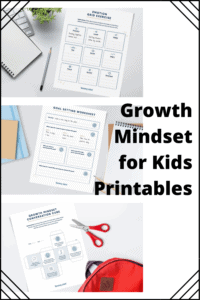
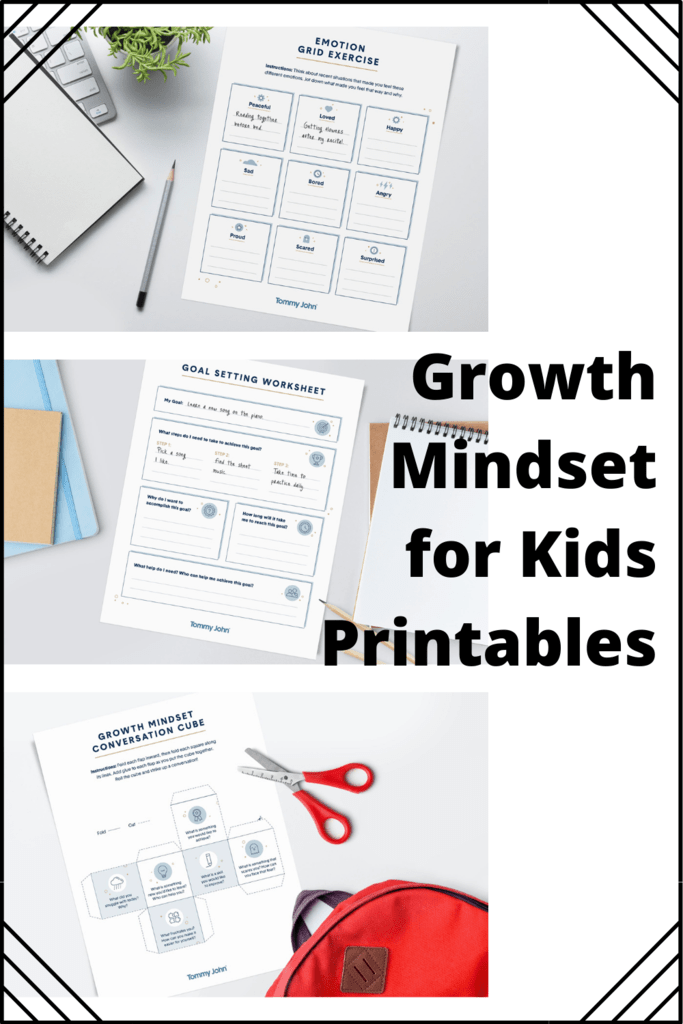
Growth Mindset for Kids Printables graphic with images of the free printables

How to Help Your Child Develop a Growth Mindset – Free Printables

Preparing kids to be high achievers is no easy task. Every day seems to bring new challenges. And in your quest to be the best parent possible, you’ve probably tried every trick in the book. Since your goal is to keep your little one motivated and set up for success.

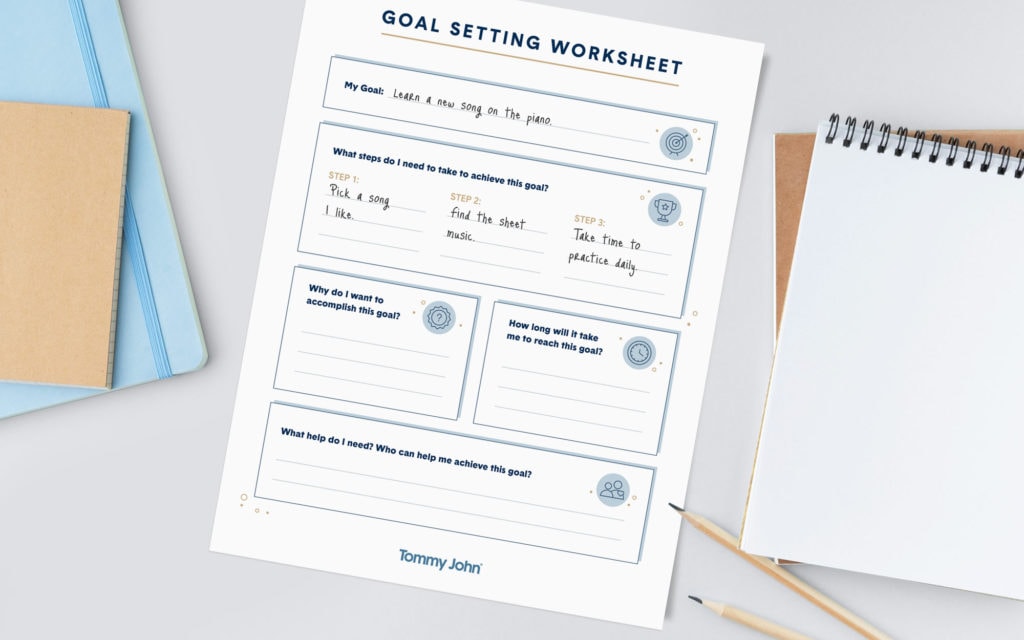
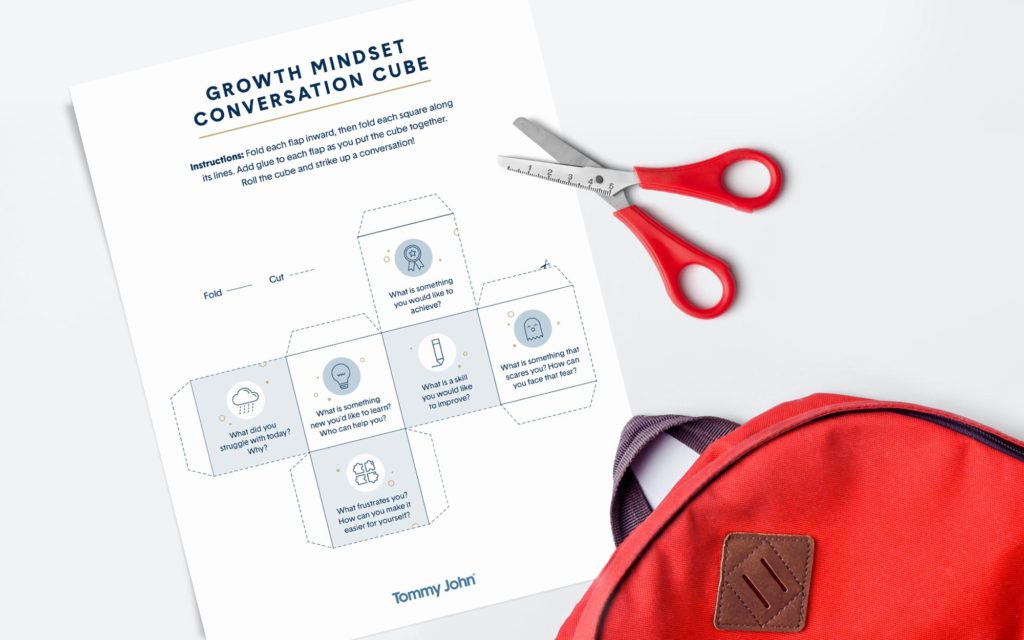
To help you encourage your child to use this opportunity to grow, the folks at Tommy John created 3 science-backed exercises such as an emotional grid, a goal setting worksheet, and a conversational cube to teach skills like identifying emotions, working through challenges and practicing positive self-talk. These printables are perfect for learning life’s teachable moments (even during unknown times). And they will inspire them to share what they are going through and foster a mindset that’s fearless to failure. 

First, let’s discuss what a growth mindset is. Having a growth mindset is an idea developed at Stanford University by Carol Dweck and it is the belief that the ability to learn is not fixed, and that it can change with effort. Duckworth says that “By testing our best ideas and strongest intuitions with the willingness to be wrong, we can start over again with lessons learned”. By encouraging your child to develop a growth mindset, they will learn not to fear failure but thrive in a challenge. 

To help your child develop a growth mindset, we’ve included the following printables for your use!

For more on this topic, check out the full Sports and Back to School collections


Growth Mindset for Kids Free Printables


For more on this topic, check out the full Sports and Back to School collections

Growth Mindset for Kids Printables graphic with images of the free printables

Filed Under: Back To School, Free Printables, Sports

6 Interesting Word Games and Activities for Vocabulary Practice

word games graphic

Whether you are thinking about studying a second language, or you are just looking to increase your vocabulary, there are lots of different activities and games which can help you to learn new words and practice how to use them. Retaining new vocabulary is one of the most difficult language skills as it requires you to use all of the words regularly. Studies have shown that many people learn best when they are having fun. So playing games is very useful! To help everyone take their vocabulary skills to another level, here are 6 interesting word games and activities for vocabulary practice.


For more on this topic, check out the full Back to School and Summer Learning collections


1. Scrabble

Probably the most well known word game of them all! Scrabble fans have been enjoying this board game since it was first developed in the 1930s. Since that time, the rules of the game have hardly changed at all. Every player has seven tiles with different letters. Each letter has a different value (the highest scoring letters being those which occur least in the spelling of words).

Players use these tiles to make words on the board and try to get the highest score possible. The words on the board have to interconnect. So it is not enough to just have good tiles, they also need to be put out tactically using special squares for higher scores, which can double or triple words and letters.

Scrabble is a great game for improving and practicing your vocabulary as players need to constantly sort and rearrange the tiles in order to find the best words. Words that use the same letters in a different order are called anagrams. Recognizing and using anagrams is one way to really improve vocabulary. If you are looking to really level up your vocabulary skills, try out an anagram solver online as this will help you with Scrabble. It will even help with your everyday vocabulary.


2. Boggle

Using similar skills at Scrabble, Boggle is a game that improves your vocabulary as you have to make new words from a random selection of letters. This is known as a word scramble game, and the folks at unscramblex.com explain that there are many versions of this kind of game. With Boggle, 16 dice with different letters are placed in a plastic grid which is then shaken up by the players. After that, players have a certain amount of time to find as many words in the random selection as possible. This time limit really helps players to practice their vocabulary because it forces them to think quickly.

boggle


3. Word Searches

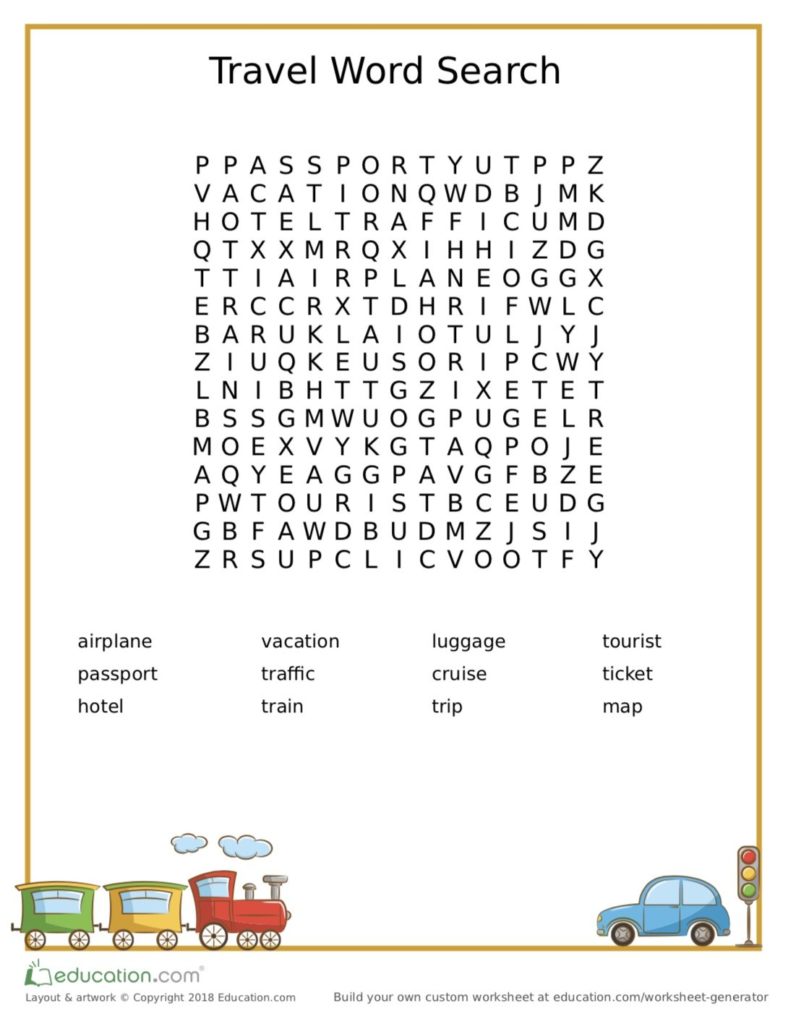
Word searches are a super fun activity! They are especially good for familiarizing children with new vocabulary words. Word Searches are made by filling in a grid with random letters which hide some actual words. There is a wordlist that tells you what to look for. You then have to find everything on the list to complete the puzzle.

Simple word searches may only be small with a 6×6 or an 8×8 grid. But you can also find more difficult ones with significantly bigger grids. As well as completing word searches, they are also really fun to make. If you are making one for your children, add in some Easter Eggs for them to find like their own name or the name of their pet.


Travel Word Search

Travel Word Search Printable

And view the solution to the word search here: Word Search Solution


4. Crosswords

Doing a crossword is an excellent way to link new vocabulary words with their definition. Almost every local and national newspaper has a crossword and the difficulty levels vary dramatically. This is ideal for vocabulary progression because you can start off with the easiest newspaper crosswords and move up to the more difficult ones.

The trickiest crosswords use cryptic clues. So not only is the vocabulary more advanced, but you will also need to think out of the box in order to finish the puzzle. Particularly when you manage to finish a notoriously difficult crossword, like the one in the UK Times newspaper. – There is a real sense of achievement that will make you want to do it again and again! Whenever you learn a new word from the crossword, make sure that you write the word and its meaning down in a notebook so that you don’t forget it.


5. Taboo

Taboo is a fun and exciting game! It’s a perfect game to play with your family, or friends during parties. And it’s even great for a random Friday night! The game is played by two teams who compete against each other using a set of cards with words on them. The purpose of the game is to describe the main word on the card to your team without using any of its related words.

For example, if the main word is “beach,” the words you won’t be allowed to use might be “sea, sun, sand, bucket, spade.” Taboo is a fantastic game for vocabulary practice because it forces you to use more obscure terms and descriptions for your team to guess the answer. Each player has one minute to get through as many cards as they can. Then the points are added up until everyone has had a turn and one team is declared the winner.


6. Heads Up

Heads Up is a really clever game! It is even available to download for free as an app to your smartphone. Players choose a category such as “Animals” and then hold the phone on their forehead so that only the other players can see the words. Those players then have to describe the animals to the person holding the phone so that they can guess it. If the guesser gets the answer right, they flick the phone down to get a point and move onto the next animal. If they don’t know, they can flick the phone up to pass.


Word Games and Activities for Vocabulary Practice

There are so many awesome ways that you can practice and review your vocabulary! Playing games and doing fun activities is always the most effective way to learn. It has been shown that we retain information best when having fun. Try out some of the suggestions in this article and you will see your vocabulary skills go through the roof.

For more on this topic, check out the full Back to School and Summer Learning collections


word games graphic

Filed Under: Back To School, Summer Learning

Keeping Your Family Fit And Healthy – Health Checks You Don’t Want To Miss

Health Checks You Do not Want To Miss graphic

Health and wellbeing should be a priority for every family. Whether you have young children, or kids that are preparing to fly the nest, it’s crucial to keep up to date with routine appointments and assessments. This will help to promote healthy living and reduce risks. In this guide, we’ll discuss some health checks you don’t want to miss.


For more on this topic, check out the full Staying Healthy collection


Dental Checks

Dental check-ups are important for children and adults. Regular examinations reduce the risk of decay and gum disease. They also lower the risk of losing teeth prematurely. During a routine assessment, dentists will also carry out oral cancer checks on adults, and make sure that everything looks good in terms of orthodontic development in children. If you haven’t been to the dentist for years, now is the time to make an appointment for the whole family. It’s hugely beneficial to get kids used to going to the dentist at an early age so that they are accustomed to the sights and sounds. You can prepare children for trips to the dental office and reduce anxiety by using books and watching educational TV programs that show kids what happens when they climb into the dental chair.

[Read: A Gentle Approach To Oral Hygiene for Kids]

Hearing Tests

You might assume that you don’t need a hearing test unless you’re struggling to hear the radio. Or, if you can’t make out what other people are saying if there’s background noise. The trouble with hearing loss is that it occurs gradually and it can be difficult to detect in the early days. Regular assessments enable medical professionals to identify changes in your hearing. It’s also important to seek advice if you experience tinnitus. Tinnitus is often temporary and it develops as a result of exposure to loud noises. If you have tinnitus after a concert, for example, this is usually nothing to worry about. An expert may recommend tinnitus treatment if you have recurrent bouts, or if your symptoms are getting worse. Children should have frequent hearing tests during the early years. While adults should have an assessment every 3-10 years depending on their age.

Essential Health and Development Checks

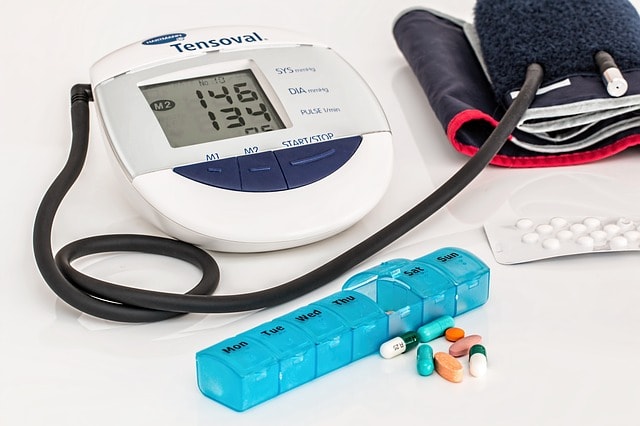
Children and adults are advised to attend appointments for essential health checks. Assessing development is key for younger children. Adults should be mindful of visiting their doctor to keep an eye on their blood pressure and BMI (body mass index). If you are invited to attend an appointment, or you are advised to visit a clinic to have your blood pressure checked, don’t ignore the text or dump the letter in a pile of mail. A healthy BMI can reduce the risk of type 2 diabetes, high blood pressure, and obesity. Regular blood pressure checks are important because there are often no obvious symptoms of high blood pressure, a risk factor for cardiovascular disease. For kids, keeping up to date with routine checks will lower the risk of health problems and ensure that any issues are spotted and addressed as early as possible.

Health Checks are Important

Eating well and living an active lifestyle are essential for optimum health. But it’s also important for adults and children to attend routine health checks and assessments. If you haven’t been to the dentist for a long time, or you’ve been meaning to make an appointment to get your hearing checked, pick up the phone and make the call now.

[Read: How Can You Take Care of Your Family’s Health?]


For more on this topic, check out the full Staying Healthy collection
Health Checks You Do not Want To Miss graphic

Filed Under: Staying Healthy

7 Tips to Interest Your Child in Playing an Instrument 

Not many aspects of child education can benefit your child in such a way as musical proficiency. Musical ability has been found to be a major contributor to several different cognitive abilities. Children with extensive musical education score better across all aspects of testing. However, not all children are equally interested or capable. Getting your children to embrace a musical instrument isn’t always easy. Don’t stress though, there are several things you can do to improve your child’s love of playing music. Continue reading below to learn how to encourage your child in playing an instrument.


For more on this topic, check out the full Back To School collection


How to Encourage Your Child in Playing an Instrument


Foster A Love Of Music In General

A house of music enthusiasts will create musically-inclined children. And your love and passion for music are contagious. Be sure to share that with your children to create an environment of love and respect for music and instrumentation.

If you or family friends play an instrument, be sure to expose your child to that as much as possible. When they play with the instrument themselves, be sure to get excited and tell them how good they’re doing, even if it sounds like a cacophony. That will make it fun and begin the process of building their confidence with music and playing.


Make It Fun

The biggest flaw in the traditional parenting technique is being too strict. And being forced to do anything only makes people withdraw. It’s much better to provide a variety of different musical activities for a little bit of time each day.

Providing a variety of different instruments and activities not only keeps it fresh, but also helps you and your child discover their inherent abilities. It will also allow them to find what it is that they enjoy about music.


Encourage Exploration Of Sounds And Objects

Exploration is what children are wired to do. With enough patience and opportunity, you don’t have to do anything as a parent but expose your child to the possibilities.

With music, there are many ways to do that. One of the best ways to get started is to let them handle a variety of beginner instruments. There are several beginner instruments that you should expose your child to. A wooden flute is one of the best instruments to introduce your child to because it’s easy to play and sounds great. You could also get them a xylophone or child’s guitar. Percussion is always a great choice as well.

However, make sure you don’t put too many expectations on them at this point. Just provide the environment and let nature take its course.


Reward Your Child, Positive Reinforcement Is Key

In line with the idea of keeping it fun, make sure you’re using as much positive reinforcement as possible while avoiding negative reinforcement whenever you can.

For those who are unfamiliar, positive reinforcement means rewarding your child with praise and external rewards (like candy or playtime) when they do a good job. That is to say that you should focus on the positive and be sure to let them know when they do it right.

On the other hand, negative reinforcement is the type of conditioning that most of us are most familiar with. This is the kind of behavioral modification that relies on saying no and scolding. With this type of reinforcement, a child learns what not to do. While negative reinforcement is an important part of every child’s development, too much has detrimental effects on growth and development. An excess of negative reinforcement because indistinguishable from abuse.

Of course, in reality, both of these methods will be used and a balance must be found. However, it’s never fun to be told no a thousand times and to be yelled at. So be sure to control the situation and if your child is misbehaving, stop the activity for the time being and come back to it later when the situation is more suitable to their mood and temperament.

This technique may take a bit of practice for many, but it pays off big time. Not only because of faster progress, but because of the healthier parent-child relationship it engenders. For more tips on positive reinforcement and parenting, you can check out these tips for child behavior.

Give Them Options

Children get bored easily sometimes and having a card up your sleeve is a great way to keep music time fresh. Give them plenty of options and let them play around with as many instruments as you can provide.

One of the biggest errors parents make when encouraging their child’s musical development is forcing their own desires and will onto their child. Many parents have a clear idea of the instrument and style of music they want their child to play. While that’s to be expected to some extent, forcing your child to play what you want and when you want it is a surefire way to turn them off to instrumentation forever.

Instead, hold on to your aspirations and don’t let them be known until later. At this point, developing a lifelong habit of music appreciation is the best way to ensure that your end goal is met. After your child develops an earnest passion for music it’s much easier to sway them and compromise with them to reach your end. Even if that means letting them play their own favorite instrument in return for mastering the instrument of your choice.

Anyways, the best musicians can play multiple instruments. And the diverse musical skillsets that come with a variety of different instruments are what is required to foster genius-level musical ability later in life.


Sing

Along with percussion, singing is the fundamental musical ability of people. It’s also a great and fun way to bring the whole family together in a joyous and rewarding way. It’s also a form of musical practice and development that is available to everyone at any time without the need for any equipment. Families that sing introduce their children to music at earlier ages and with more frequency. It’s also a great way to introduce them to the enjoyment of music.


Cut The Pressure And Boost The Payoff

Parents often put too much pressure on their children and doing that rarely turns out the way you think it will. That’s because children are people just like you. If they always feel pressured to perform and to produce results, the joy of music will be lost to the constant stress and fear that comes with trying to fulfill the wishes and dreams of other people.


Encouraging Childhood Development Is A Tightrope Walk

As most parents can attest, it can be very difficult to get your children to embrace the things you want. If you push too hard, they will pull back and develop a distaste for whatever you’re encouraging. If you don’t do enough, they won’t develop at all musically save the chance that your child is naturally interested and inclined.

Instead of using a heavy hand, provide a musical environment at home and school to show your child that music instrumentation is just a fact of life. When exposed in that way, your child will have no option but to embrace the world around them.

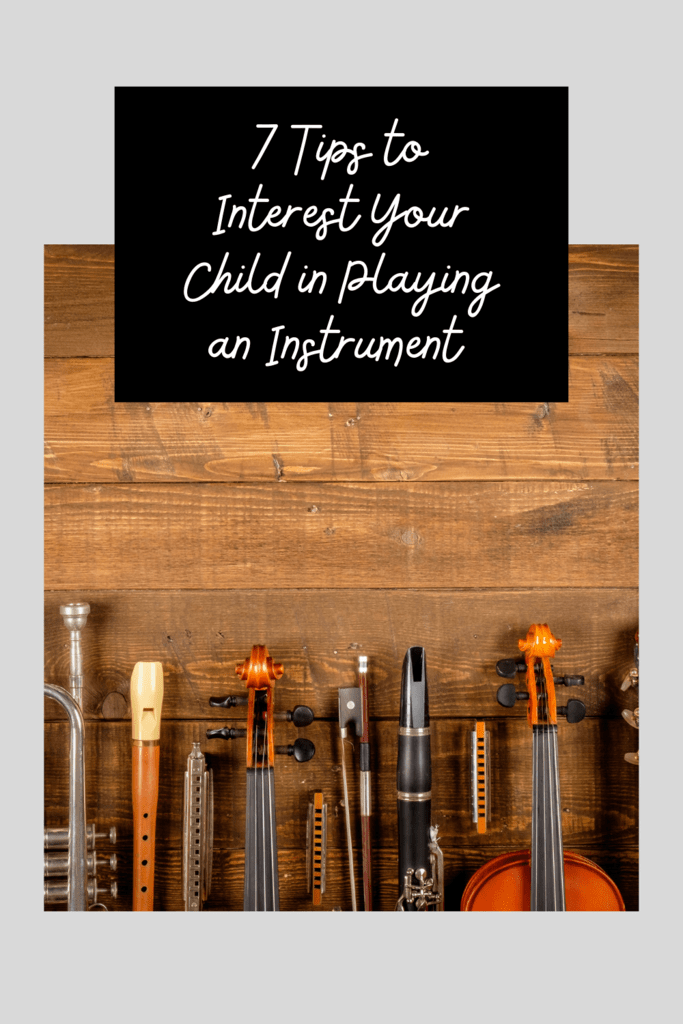
encourage child to play instrument graphic with flatly picture of various instruments

Filed Under: Back To School

6 Practical Bedding Tips You Can Use At Home

February 22, 2021

bedding tips graphic

Our beds take plenty of space in our bedrooms. Not only do they take up lots of actual space, but they visualize the area as well. This is why a beautifully made bed can increase the visual appeal of a room. Home interior designers know this and use bed linens to their full potential. A well-made bed can change the whole appeal of your room, even if the other items look ordinary. Additionally, layering the bed boosts the wow factor even more. Dressing a bed is a life-long skill that everyone needs to have – this is essentially the same as getting yourself dressed. We’ve dug deeper for practical DIY bed-making tips, and here are the top six. Keep reading below for practical bedding tips that you can use at home.


For more helpful resources, check out the full Family Home collection


6 practical bedding tips that you can use at home

Add an Eye-Catching Top Sheet

Having a designer top sheet lying on your bed helps to visualize and add context to your room. For instance, try putting the top sheet on the bed with the wrong side facing up. If it’s wide enough, you can pull it to the top of the mattress. Ensure you have enough room at the top to fold the sheet over other blankets. As the team at visionbedding.com/custom/fabric points out, you can also have a designer-bedding precisely as you envision it. This helps add pomp and color to your overall room appearance. For the top sheet, ensure you tuck it under the mattress at the bottom end of the bed to achieve straight hospital corners. If you have extra blankets, you can also add them in thin layers and tuck them in with the sheets.


Throw in Some Extra Pillows

Extra pillows in your bed can spice things up quickly. Pillows look beautiful when they’re plump and covered in clean cases. Start by choosing a pillow that’s suited to your sleeping position. Then, add in the extra pillows to dress the bed when you’re not sleeping in it. Every great bedding idea starts with pillow dressing.

A great example is incorporating throw pillows or scatter cushions for bedroom decoration. Go for colors that clash or contrast with your duvet cover design. However, please don’t overdo it as you don’t want to spend hours dressing your bed in the morning.


Patterns and Colors

You can create a bit of drama by using your bedding to introduce color and pattern to your bedroom. This doesn’t have to be as permanent as a wall color, so it’s easy to change from time to time. This gives your room a different look each time. Start by laying a foundation of crisp whites. To increase the appeal, go for a design with a colored border.

This is an innovative way of introducing color instead of having a block color or a printed duvet set. Next, get creative by adding in throws, and decorative scatter pillows for an inviting appeal. If you plan to incorporate a bit of pattern into your space through bedding, ensure you keep your sheets plain.


Introduce a Theme or Color Palette

Choose a bold design that makes your bed the focal point of the room. Next, build up your theme with the bedding design in mind. For instance, bedding with nature designs can be complemented with a floral-colored wall. Remember: dressing a bed is all about attention to detail. Small and visible details like an exposed zip, button, or metallic folding can add that extra layer of elegance to bed styling. Additionally, what lies under is also crucial. For instance, a flat sheet with old-fashioned hospital corners is a lovely detail.

Sometimes, Less Is More

Scandinavia bedroom ideas are very popular with many interior designers; This comes with a good reason. Combining natural colors and soft fabrics with organic cotton makes a relaxing environment that looks appealing. Additionally, minimal is key: you should avoid fluffy blankets, bold prints, or silky sheets. Keep your bed design ideas simple by using a bed throw and a cushion. For a more inviting appeal, set these in natural cotton and mild tones.

[Read: What to Keep on Your Nightstand & Relaxation Techniques]


Go for Quality Bedding

We saved the best for the last. This guide would’ve been incomplete without mentioning this. Remember, you get what you pay for: from pillow covers to duvets and the filled bedding. Always go for the top-quality bedding available. This will not only exude style but also withstand frequent washing. Finally, ensure you give duvets and pillows a fair shake before dressing. This helps to even out the filling and return their plump.


Practical Bedding Tips

Even on a small budget, you can still get a designer look and appeal for your bed. Use these six practical bedding tips and tweaks to give all the beds in your home that elegant designer look. Finally, don’t forget to add in a throw. This can be anything, such as a blanket. Throws help add a welcoming layer to your bed and compliment your overall preference.

For more helpful resources, check out the full Family Home collection

bedding tips graphic

Filed Under: Family Home

How To Protect Your Child’s Ears At A Concert

protect child's ears graphic

Having children is a precious gift. The sound of laughter that fills our homes and overwhelms us with love and gratitude every day is a beautiful feeling. Ok, you don’t feel that every day. And with the current restrictions on getting out of the house, you may be pulling your hair out. But even so, our lives are better for having our children around. So, what things are you looking forward to doing once restrictions are lifted, and we can all socialize as much as we want again? If going to concerts, or other large (or loud) events, is on your list then keep reading below to learn how to protect your child’s ears at a concert.


For more on this topic, check out the full Staying Healthy and Special Needs collections


Concerts And Festivals

Your list may be endless, so keen we are to enjoy life once more. You may be thinking that you would like to attend a live concert. For the past year, concerts have been on hold due to the global pandemic. But hopefully, we will enjoy the thrill of live music in the not too distant future, with hope on the horizon. And it’s good for our mental health to plan things to look forward to, even if it may not happen for awhile. So what do you need to consider when attending concerts or festivals with children?


Ear Plugs

Firstly, make sure you have enough snacks and drinks. Children are notorious for needing above the average person’s snack requirement, so make sure you’re well stocked up. They may also serve as a distraction if your child becomes overwhelmed. If attending a concert or festival with live bands/music, it may be useful to invest in some live performance earplugs for your child’s comfort. Young children can find loud music a little intimidating, so using earplugs specially designed to block background noise will mean they can enjoy the music safely and remain relaxed. Make sure you check the NRR (noise reduction rating) for quality and ultimate protection. There are various options, but most have the same function; they block any noise other than the music, enabling your child to listen safely. So they can still enjoy great sound quality.

The noise at concerts doesn’t just come from music. Thousands of screaming fans are also attending with their contribution. Children are often unaware of this before a concert, so it may cause some discomfort initially.

Some children suffer from hyperacusis, which is a condition that affects the perception of sound. If your child experiences this, loud music will be particularly challenging. It can also cause pain for some children, and in some cases, a child will develop a fear of noise. It can be caused as a result of a medical condition and should be investigated by a professional. A doctor may suggest sound therapy to eliminate or reduce the problem gradually. In the meantime, either avoid large music venues or always provide good quality ear protection for your child so he/she does not develop a phobia. Most hearing aids can be adjusted to provide reduce excessive amplification.


Earmuffs

Earmuffs are another option for little ears. They completely cover the area to block sound and are more comfortable for younger children to use. As a general rule of thumb, if you are in an environment where you have to shout to be heard, you should use ear protection. Too much exposure to loud music can cause permanent damage within 5 minutes, and the damage is irreversible. The ears of babies and toddlers are very vulnerable to noise, so protecting them should be a priority. Earmuffs are great because they can be utilized and used for warmth, as well as sound restriction. You can also use them when traveling on a plane or any other environment that could be challenging for the ears. They can even be used to sleep in.

[Read: Sensory Processing 101]


Picking the Right Area

Choose the right seating area. Where you sit in a concert will determine how much sound you are exposed to. Avoid sitting next to speakers as this will be the loudest place. The front row, although good for the view, is the worst place for sensitive children.

If your child seems to be struggling with the environment, it’s good to take a break periodically. Take them outside for some fresh air or somewhere quiet and calm to give them a chance to relax. Concerts and festivals can be intense, so taking regular breaks are vital.

It might be wise to take your child to a smaller music venue before exposing them to a large-scale concert or festival, especially if they suffer from hyperacusis. This way they can be introduced gradually and will be less intimated by a large event.

We are all looking forward to the time we can engage in the things we enjoy again. Our children also need exciting things to look forward to. So start planning now, and in no time we’ll be back out there having fun with the people we love.

For more on this topic, check out the full Staying Healthy and Special Needs collections


protect child's ears graphic

Filed Under: Mental Health, Special Needs, Staying Healthy

Tips For Supporting Your Teens

support your teen graphic with image of a girl with a yellow backpack

Teenagers are in a tough stage of life where they are trying to figure out who they are. And as a parent, it might feel like they are making more mistakes than good decisions. However, it’s your responsibility to help guide them through this time, and there are helpful ways to do that! Keep reading for tips for supporting your teens.


For more on this topic, check out the full All About Teen and Child Behavior collections


Remember You Were A Teen Once

One thing that’s important to remember when it comes to your teenager is that you were once in their shoes. Regardless of the time difference, and how things were perhaps a little bit different, they are still going through the same emotional turmoil. It can be hard being a teenager. From fitting into school, to trying to find themselves at the same time. They are also trying to decide on their future when they might not know what that looks like yet. And all of this while their new hormones are flying all over the place.

Life is no longer simple. It’s extremely complicated, or even difficult, through their eyes. However, remember that you were them once and it’s good to show a little bit of leeway when they act out or don’t do something they’re told to do.


Be Aware Of Their Need For Independency

Every teenager is going to need a bit more independency than they had when they were relying on you for everything. It’s important to recognize this and try to give them their space when they need it. Of course, as a parent, sometimes it’s necessary to step in and perhaps make them do something they don’t see as being particularly fun. However, it’s time to let them find their own feet and to start discovering new things and new passions in life that they might not have stumbled upon yet.


Establish Respect For Others And The Law

Respect for others and the law is highly important and something that you want to do from an early age so you’re not having to get aggressive criminal defense attorneys involved. Establishing that respect is definitely needed and it’s something that they will learn from you as parents and from adult role models like teachers. So it is crucial to be respectful and be a positive role model for them.


Address Worrying Behavior In The Right Way

Are you worried about your teenagers behavior? It might be the hormones, but it could be a deeper problem that needs to be addressed before it gets out of hand. These are the years where they are easily influenced and could go down the wrong path. With that being said, you want to discuss any worrying behavior, but to make sure you do it in the right way. Doing anything forcefully or against their will is not going to help and may only make things worse.


Dealing with a troublesome teen can be expected, so use these tips to help guide everyone through this stage in their life. And if you ever are concerned, or feel like you don’t have the answers, do not hesitate to reach out for help! There are many wonderful services, counselors, coaches, and even doctors out there who have studied and prepared for these types of situations. Reaching out to an expert can help as they offer guidance during these phases. Best of luck!

For more on this topic, check out the full All About Teen and Child Behavior collections


support your teen graphic with image of a girl with a yellow backpack

Filed Under: Child Behavior, Teen

Baby Essentials For Every First-Time Parent

First-time parents have the tendency to fret over the smallest details. Not to worry through, because you are not alone. Expecting a baby can get very anxious, especially if you have zero experience caring for an infant. Luckily, many parents have shared some nifty tips and tricks based on their parents’ experiences. Below are baby essentials for every first-time parent.

baby essentials for every first time parent - 1


Here is a newborn checklist that will come in handy for every first-time parent. Use this as a guide to gather a list of necessary items that you might need for your baby. Take some time off between your doctor’s appointments and other busy schedules to pick up a few of these essential items.


For more on this topic, check out the full Baby’s First Year collection



Breastfeeding or Nursing Supplies

Of course, the first thing that comes to mind when taking care of a baby is breastfeeding it. If you plan to breastfeed for more than the first few months, you do not need much equipment except for some bibs and breast pads. However, it would be nice to have a nursing pillow and bra and a lotion for sore nipples for you and your future baby’s comfort.

Feeding bottles can be introduced after two to four weeks, depending on your baby’s health. For this, you will need milk bottle containers and a breast pump to relieve engorged breasts or stash a fresh supply for night feeding. You can try manual or electric pumps, whichever works well in your preference.

Formula feeding requires more things such as containers for the milk formula, the formula itself, bottle sterilizers, and of course, feeding bottles. You will also need many burp bibs, nipple brushes, and a thermal bottle carrier.

[Read: Fed Is Best – Breastfeeding versus Formula Feeding]


Sleeping Essentials

After breastfeeding or bottle-feeding your baby, he or she will most likely fall asleep. This is normal as their small bodies release a sleepy hormone as soon as they start feeding on milk. During bedtime, you should decide where to put your baby to sleep. Have a separate crib for your infant or make a space in your room.

Whether you want your baby sleeping on their own crib or at your side, you need to stock up on fresh blankets, at least two or three for easy replacement when one of them is in the laundry. You can also try a baby sleeping bag that can help to prevent SIDS or sudden infant death syndrome.

baby essentials

Diapers and Clothing

It is important to note that your baby can double in size after five months. Clothing is important and essential to keep your baby warm and comfortable. However, avoid buying excessive onesies or pajamas that will only fit them a few months in. You will also need a different laundry detergent to wash infant clothes without strong chemicals.

You can opt for reusable or disposable diapers for your baby. If you are purchasing reusable diapers, a dozen pieces should be good for a week or two; again, it depends on how often you change your baby. Disposable diapers, on the other hand, you can have two new packs of new-born sized diapers for a start.

You will also want to get baby ointment for diaper rash, changing pads, and disposable wipes. When bathing your new-born, you need a plastic tub, baby soap, soft bristle hairbrush, washcloths, and three hooded towels. Parents always want what is best for their babies, so it is acceptable to get a few extra items, but do not overdo it.

[Read: Answers for All of Your Common Newborn Concerns]

For more on this topic, check out the full Baby’s First Year collection


Filed Under: Baby's First Year

  • « Go to Previous Page
  • Page 1
  • Interim pages omitted …
  • Page 76
  • Page 77
  • Page 78
  • Page 79
  • Page 80
  • Interim pages omitted …
  • Page 134
  • Go to Next Page »

Copyright© 2026 · Brunch Pro Theme by Shay Bocks

We use cookies on our website to give you the most relevant experience by remembering your preferences and repeat visits. By clicking “Accept”, you consent to the use of ALL the cookies.
Cookie settingsCLOSE and ACCEPT
Manage consent

Privacy Overview

This website uses cookies to improve your experience while you navigate through the website. Out of these, the cookies that are categorized as necessary are stored on your browser as they are essential for the working of basic functionalities of the website. We also use third-party cookies that help us analyze and understand how you use this website. These cookies will be stored in your browser only with your consent. You also have the option to opt-out of these cookies. But opting out of some of these cookies may affect your browsing experience.
Necessary
Always Enabled
Necessary cookies are absolutely essential for the website to function properly. This category only includes cookies that ensures basic functionalities and security features of the website. These cookies do not store any personal information.

Non-necessary
Any cookies that may not be particularly necessary for the website to function and is used specifically to collect user personal data via analytics, ads, other embedded contents are termed as non-necessary cookies. It is mandatory to procure user consent prior to running these cookies on your website.


SAVE & ACCEPT