• Skip to main content

Adore Them Parenting

Practical Positive Parenting Advice and Resources

Practical Positive Parenting

Go here for our book!

  • About Us
  • Our Book
  • Parenting Advice
    • Raising Children
    • Family Life
    • Seasonal
    • View All Topics
  • Free Printables
  • In the Media
  • Shop

Karissa Tunis

5 Reasons to Start a Blog

This article contains Amazon affiliate links.

reasons to start a blog graphic with flat lay of leaves, keyboard, and coffee

Here are 5 reasons to start a blog from Jacqueline Bodnar, blogger and author of “Blog for Bucks: How to Create, Promote, and Profit from Your Blog”


Many parents would love a way to make some extra money from home. Others may want more than just some extra money; they may want a way to work from home full time. The good news is that you can do both of things when you become a blogger.

Don’t let the fact that there are already a lot of bloggers out there make you fear throwing your hat into the ring. Bloggers have the ability to choose what they focus on, and as such the topics run the gamut. There’s always room for more bloggers, especially if you are passionate about a specific topic.

If you have been considering starting a blog, or you have been searching for something to do to make money from home, now is the time to consider blogging. Here are 5 reasons to start a blog…


This article is written by Jacqueline Bodnar
For more on this topic, check out the full Work Life Balance collection


5 Reasons to Start a Blog


Make money from home

Blogging offers a great way to earn money from home. There are numerous ways to earn money from your blogging efforts. Once you build an audience, you can leverage that to bring in an income.


Focus on a topic you enjoy

Everyone has something they are passionate about or would talk about for hours. Chances are, that topic would make a great focus for a blog. Blogging on that topic gives you an outlet to share what you know, find people who share your passion, and grow and learn more.


Promote your other endeavors

A blog can be a powerful marketing tool to help you get sales and new customers for another business you may have. Blogs can help bring in traffic to your website, establish you as an expert in an area, and help you increase your overall income.


Enhance your resume

Once you have a successful blog, you can always add that to your resume. It will serve as a way to show people the skills and knowledge you have in a particular area, as well as your writing capabilities.


Blog for fun

Many people start a blog simply because it’s a new project they can take on and have fun with. You may start it as a fun project, but you never know where it will take you or what opportunities may arise.


The truth is, when you start a blog, you never know where it will take you. Perhaps you earn a side hustle income from it, but maybe it becomes your full-time career. Maybe it opens doors to job opportunities, sales leads, and community involvement opportunities. One of the exciting things about blogging is that you don’t know where it will take you, but there is no doubt that you will enjoy the journey.


The following links are Amazon affiliate links.
For more in-depth information about starting a blog that makes money, check out my new book, “Blog for Bucks: How to Create, Promote, and Profit from Your Blog.” The book gives you a comprehensive look at how to start a blog through profiting from it. Whether you want to focus on a blog that targets only people in your county or focuses on a segment of the population around the country, you can build an audience and get paid to do it.

For more on this topic, check out the full Work Life Balance collection


Featured Contributor: Jacqueline Bodnar

Jacqueline Bodnar is a blogger who has multiple blogs, including Volusia County Moms and VegBlogger. She is also author of several books, including “Blog for Bucks: How to Create, Promote, and Profit from Your Blog” and the historical fiction novel “Blueberry Steel,” which focuses on the Rosie the Riveter era.
  • JacquelineBodnar.com
  • Volusia County Moms
  • VegBlogger


reasons to start a blog graphic with flat lay of leaves, keyboard, and coffee

Filed Under: Work Life Balance

What to Wear to Your Photo Session

What to Wear to Your Photo Session

You booked your photo session with your favorite photographer and as the date approaches, it hits you. WHAT WILL WE WEAR?! Below I share some fun tips for you to consider when deciding on what everyone will wear for your next photo session. And continue scrolling below for outfit examples.

Mix & Match

Gone are the days of all white shirts and khakis. My number one tip for what to wear for your family photos is plan to coordinate, not match. The only exception in my opinion is to allow the children to match, because, let’s be honest…who doesn’t love putting their kids in matching outfits? Pick 2 to 3 colors to incorporate and then work on using them in everyone’s outfits whether through a scarf or a shirt or maybe a piece of jewelry.


Comfort

Something else to consider is to be comfortable. If you are uncomfortable in what you are wearing, it may show in your images.


Graphics

Another tip I like to give is avoid graphic tees whenever possible. You want the focus of your family photos to be on you and your faces, not on whatever your t-shirt says.


Prints

Prints are fun and totally fine to mix as long as it’s done right! Below you’ll see an example of mixing prints. (dad and daughter are both in prints).


Surroundings

Dress for your surroundings. It’s always good to keep in mind where you’ll be taking your photos. If it is fall with colorful leaves, deep rich tones look wonderful. Are you having a summertime session with lots of green? Try brighter colors or pastels!


These tips wouldn’t be complete if I didn’t show you some examples of well dressed families I have photographed. I hope you found some inspiration for your family photos this year!


This article is written by Angie Englerth
For more on this topic, check out the full Photography Tips collection


Examples of What to Wear to Your Photo Session

For more on this topic, check out the full Photography Tips collection


Featured Contributor: Angie Englerth

I am Angie, a wife and mama to two sweet little boys! I’m a portrait photographer in Lancaster county capturing the journey to and through motherhood. I believe that women look the most gorgeous when pregnant and I want them to feel the same way about themselves. My goal for each maternity session is for mamas to realize just how beautiful they are. I also enjoy capturing little ones while they are still little. All the details of newborns, from the tiny toes to the milk bumps on their nose, are my absolute favorite!

  • Website: angieenglerthphotography.com
  • Facebook: @AngieEnglerthPhotography
  • Instagram: @angieenglerthphotography

Filed Under: Photography Tips

What You Need to Know About Children’s Dental Health

February is National Children’s Dental Health Month. Each February, the American Dental Association (ADA) sponsors National Children’s Dental Health Month to raise awareness about the importance of oral health. Read below to learn some interesting facts regarding Children’s Dental Health.

 Did you know…


This article is written by Nicole Kilgore
For more on this topic, check out the full Staying Healthy collection


  • More than 25% of 2- to 5-year-olds have one or more cavities
  • Almost 20% of kids between the ages of 2 and 19 have cavities that have not been treated.
  • More than 51 million school hours are lost each year due to dental related problems.
  • Tooth decay is five times more common than asthma in young children.

So how do we keep our kids dental healthy? Here are some simple tips to keep your kiddos happy and free from tooth decay:…

Read More

Filed Under: Staying Healthy

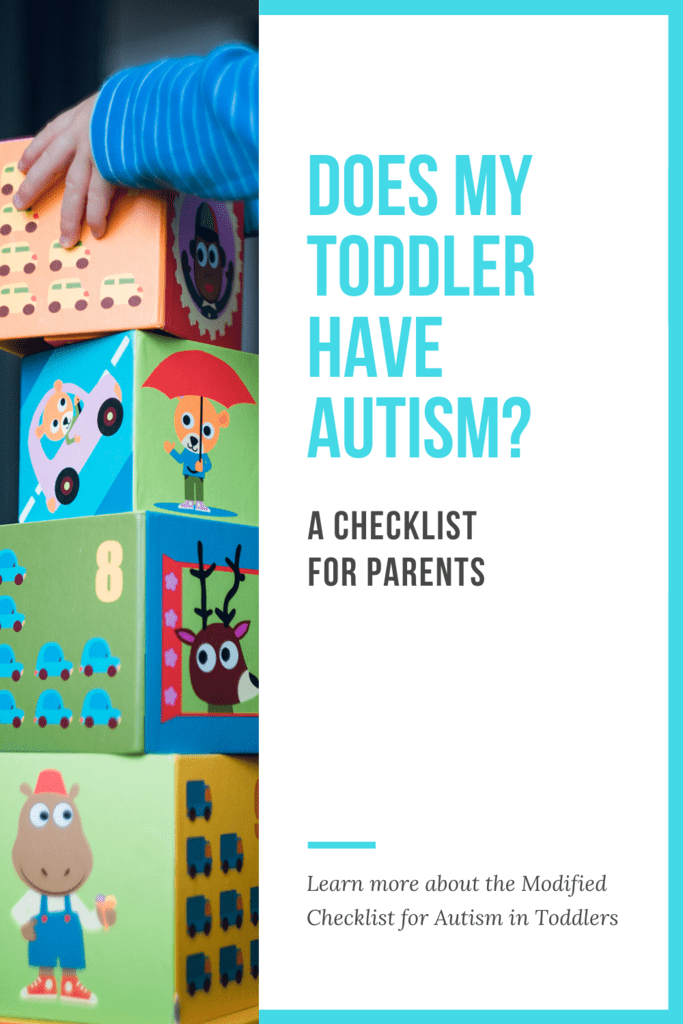
Does My Toddler Have Autism? (A Checklist for Parents)

Lots of parents have asked or even wondered, “Does my toddler have autism?” Thankfully there are wonderful resources that can give you further information about whether or not your child may have autism.


Does My Toddler Have Autism Resources

When our children are struggling or displaying puzzling behavior it can be alarming. However, it can sometimes also be tempting to simply brush it off as a phase that they’ll grow out of. While this may be true in some cases, addressing these concerns head-on can be a much more effective route to take! Below are websites that offer insight into a variety of concerns and solutions from parents who have been there.


Autism Speaks

Autism Speaks has a checklist on their website that is a wonderful resource. You can access the Modified Checklist for Autism in Toddlers, Revised (M-CHAT-R™) here: https://www.autismspeaks.org/what-autism/diagnosis/mchat


Autism Parenting Magazine

Check out Autism Parenting Magazine for additional information and helpful resources, like this article: https://www.autismparentingmagazine.com/signs-of-autism-in-girls/


Adore Them Parenting

Explore an entire collection of advice from parents, teachers, and health professionals that share on a variety of Special Need topics.


For more on this topic, check out the full Mental Health collection

does my toddler have autism_ (1)

Filed Under: Autism Awareness, Mental Health, Special Needs

Potty Training Quiz – Is My Kid Ready to Potty Train?

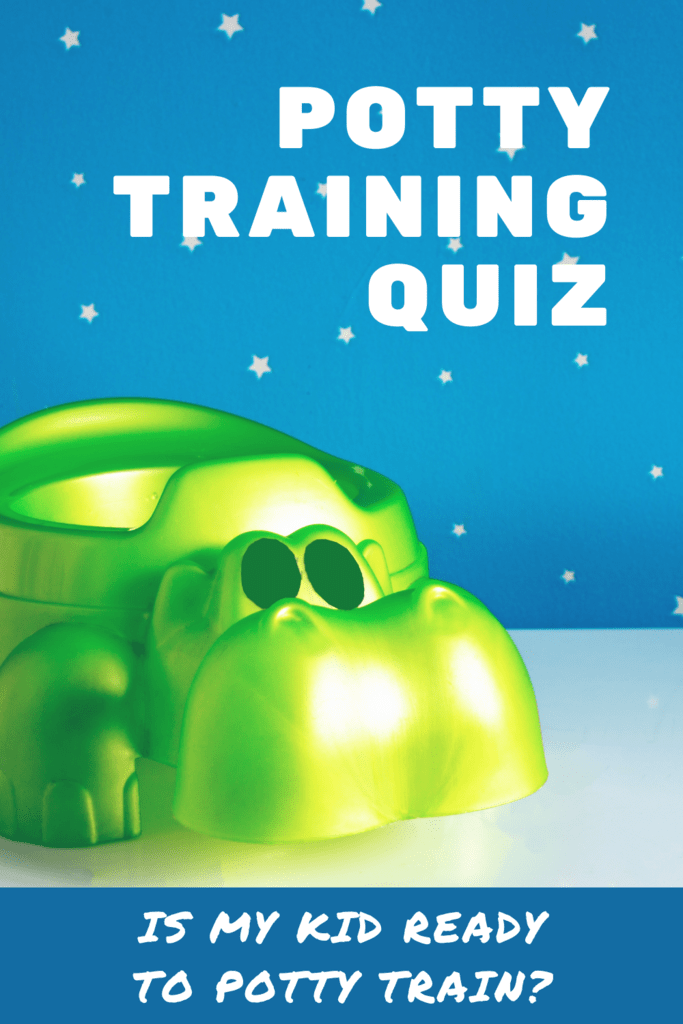
potty training quiz graphic with picture of a green potty with starry wall background

Potty Training Quiz – Is My Kid Ready to Potty Train?

Potty training is easier and happens faster if your child is truly ready in all three areas: physical, cognitive and social. But the big question is: how do you know when your child is ready? If you have never traveled this road before, you likely don’t even know what signs to look for. Take this potty training quiz to find out where your child is on the readiness spectrum.


This article is written by Elizabeth Pantley
For more on this topic, check out the full Potty Training & Pacifiers collection


Potty Training Quiz

Answer the questions below to find out if your child is ready to start potty training!


1. I can tell by watching that my child is wetting or filling his diaper:

(a) Never.

(b) Sometimes.

(c) Usually.


2. My toddler’s diaper needs to be changed:

(a) Frequently, every hour or two.

(b) It varies.

(c) Every two to three hours – sometimes less frequently.


3. My child understands the meaning of wet, dry, clean, wash, sit, and go:

(a) No.

(b) Some of them.

(c) Yes.


4. When my child communicates her needs, she:

(a) Says or signs a few basic words, and I guess the rest.

(b) Gets her essential points across to me.

(c) Has a good vocabulary and talks to me in sentences.


5. If I give my child a simple direction, such as, “put this in the toy box,” she:

(a) Doesn’t understand or doesn’t follow directions.

(b) Will do it if I coach or help her.

(c) Understands me and does it.


6. My child can take his pants off and put them on:

(a) No.

(b) With help he can.

(c) Yes.


7. When I read a book to my child, he:

(a) Ignores me.

(b) Sometimes listens, sometimes wanders off.

(c) Sits, listens, and enjoys the story.


8. My toddler wants to do things “all by myself”:

(a) Never.

(b) Sometimes.

(c) All the time!


9. I think that it’s the right time to begin potty training:

(a) No.

(b) I’m undecided.

(c) Yes.


Potty Training Quiz Results

Total the number of responses for each letter: 

  1. __________
  2. __________
  3. __________


Most answers are a: Wait.

Your little one doesn’t seem to be ready just yet. Test again in a month or two.


Most answers are b: Time for pre-potty training–get ready!

Your child is not quite ready for active training, but you can take many steps to prepare your toddler for the future. Gradual introduction of terms and ideas will make potty training easier when the time comes.


Most answers are c: Your toddler is ready to use the potty!

It’s time to start your potty training adventure. Good luck, and have fun!

[ Download a Free Potty Training Guide ]


Are you between two scores?

Just like any parenting situation, there are choices to make. If your child is hovering between two categories, it’s time to put your intuition to good use. Your knowledge of your own child can direct you toward the right plan of action.


This article is an excerpt from The No-Cry Potty Training Solution: Gentle Ways to Help Your Child Say Good-Bye to Diapers by Elizabeth Pantley. (McGraw-Hill)  


Featured Contributor: Elizabeth Pantley
Parenting educator and mother of four, Elizabeth Pantley is the author of twelve popular parenting books, including the best-selling No-Cry Solution series, and the international bestseller, The No-Cry Sleep Solution. Her books, on topics such as sleep, discipline, picky eating, separation anxiety and potty-training have been read by well over two million people in English, and have been translated into 27 different languages.
  • Website: NoCrySolution.com
  • Facebook: @ElizabethPantleyNoCryAuthor
  • Instagram: @ElizabethPantley


potty training quiz graphic with picture of a green potty with starry wall background


Filed Under: Potty Training

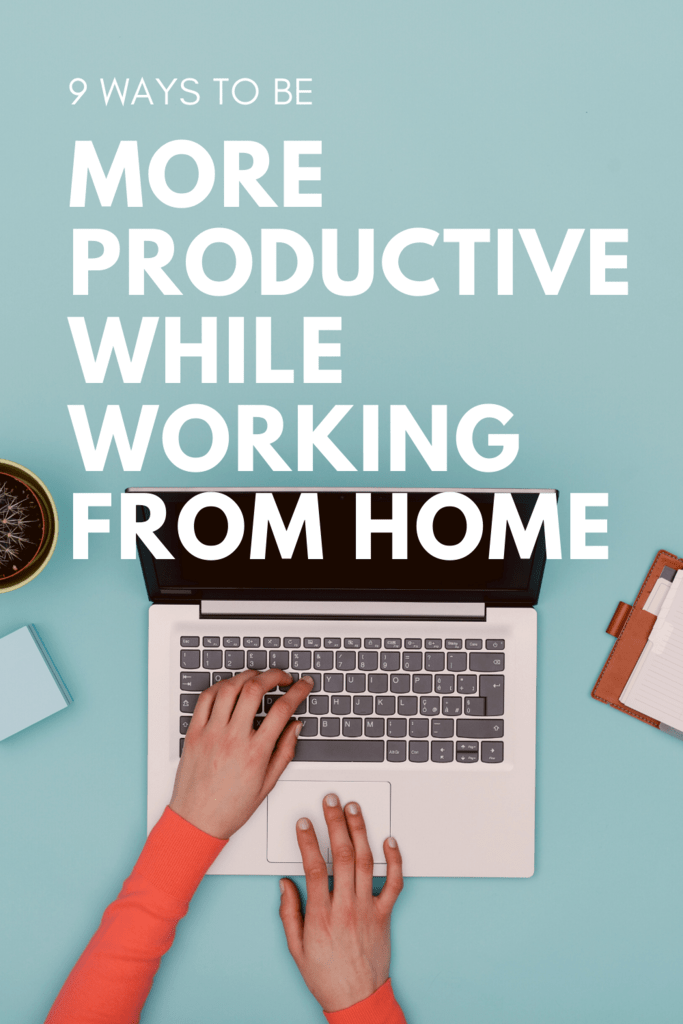
9 Ways to Be More Productive While Working From Home

Working from home provides lots of amazing perks such as wearing comfy clothes and avoiding commute time or traffic jams. However, working from home also has its challenges, like trying to stay focused and motivated. And if you are a parent that has little ones at home, or the kids are out of school for break or summer vacation, then that can provide even more distractions. Thankfully there are solutions and strategies that can help!   Below are 9 ways to be more productive while working from home with kids.


This article is written by Karissa Tunis
For more on this topic, check out the full Work Life Balance collection


Ways to Be More Productive While Working From Home With Kids

We all want to succeed in our careers, and we also want to be the best parent to our children. It’s a hard balance to juggle when you’re dealing with two roles at the same time in the same space. But it’s not all negative. Working from home is a wonderful option!

Below are 9 strategies to make working from home a success while raising your children.


Set the Kids Up First To Reduce Interruptions

This is the most important tip of all! If you do not meet the kid’s needs first, then expect them to constantly interrupt. Have you ever found yourself repeating “Just give me 5 more minutes” over and over again? In the end you were probably not being very productive, or putting out your best work. And your kids were not getting what they needed either. But when you set the kids up first, they will be much more content and hopefully allow you a chunk of time to work.

Look for toys buried in the playroom that they haven’t played with in awhile, or bring out an old bin of toys from the attic. Give them a few snacks and sippy cups, and they will hopefully be good to go while you keep an eye on them from across the room. Once they get antsy, take a little break and run around outside with them for a few minutes, and then redirect their attention elsewhere. And after you all enjoy eating lunch together, it’s nap time or quiet time for the older ones.

While a day like this does have some interruptions in it, it’s inevitable with children at home and no extra help. So embrace it. Appreciate the breaks here and there, enjoy your playtime together, and try to be productive in the blocks of time that daily life allows.


picture of items on a desk a mini calendar camera and bracelet


Create a Routine To Maintain Order

Creating a routine is crucial to being more productive while working from home! We all know how quickly things can pop up or change when you have a toddler in the house. So by having some sort of order and routine in place to begin with will make it much easier to deal with those unexpected obstacles. It also helps if everyone knows what is expected, and what is happening next.

These routines are different from set schedules, which often feel more rigid. Don’t add stress to your days by setting arbitrary schedules, but instead try to create fluid routines for different responsibilities throughout each day. Part of working from home is figuring out how to go with the flow – especially with kids at home!


Set Boundaries To Stay Productive

Setting boundaries is a must! When you are focused on work, work. Don’t let dirty dishes or laundry baskets distract you. Because if you are like me, then you can get caught up in thinking “I’ll just do this one more thing”…. but we all know it won’t stop with just that one thing 😉

Also, just like you can’t grab breakfast and lunch with friends in an office, don’t do it just because you are at home. You need to stay disciplined. Take your work seriously and make it as much of a priority as if you were working outside the house.


Looking for more information on this topic? We wrote an entire book about it!

Parenting while Working from Home

Purchase via our Amazon affiliate link HERE


Pay for Help When Needed

Sometimes we do need a little extra help, and that is OK too. No one ever said that you have to be a full-time working professional while being a full-time stay at home mom, and doing it all like a superhero – because that is just unrealistic.

As a work from home mom with four kids, I did have phases of life where I needed to hire a sitter part time to entertain my little ones, or I sent them to preschool for part of the day in order to be more productive while working from home. Yes that did cost money, but I knew it was cheaper then all day day-care. I also kept reminding myself that no phase lasts forever. So if I needed to budget more for a little help, and go out to restaurants less often, I was fine with that. My husband and I did what we needed to do to get through that phase of life and it all worked out.

[ Read: Childcare Options ]


Pick a Daily Focus – Kids, House or Work

Everyday you will have house work that needs done, professional work that needs addressed, and children that need tended to. However, picking one main focus for the day has really helped me to be more productive while working from home. If I needed to get more done around the house, then that was my focus in between everything else. I’d start a load of laundry here, unload the dishwasher there, wipe down the bathrooms during nap time, and so on. But if my focus needed to be on a work task, then I let those things go and used any spare moment to accomplish what was needed of me professionally.

It really is about quality over quantity. While we are with our kids all day everyday, we are not always spending that quality time with them. I try to consistently have a kid-focused day where I plan something fun or special with them. It doesn’t always have to be an outing that costs money. 

Sometimes we schedule a block of time to go to the playground. Or we will sit together and work on puzzles, play a game, or just color. We love turning on some fun music, grabbing some favorite snacks, and spending quality time together. I ask them silly questions, and they’ll tell me funny stories. Kids won’t remember how spotless the house was, or how many deals you closed, but they will remember how much quality time you spent with them.

[ Read: Picking Days – Time Management for Parents to Reduce the Overwhelm ]


Delegate Responsibilities

When possible, delegate a few of your responsibilities. Maybe someone else in your company can run with a certain task to ease your workload. Ask your partner to take on a new chore around the house to help make those chaotic moments more manageable.  Consider having your groceries delivered. Or if you have a sitter, ask them to take charge of something like folding a load of laundry or preparing a meal. It’s amazing how even just getting a few things off of your daily to-do list will help free up time and mental space.


50 Free Daily Planner Printables

50 free printable calendar daily planner for binder vertical portrait print


Respond Quickly

No one expects you to accomplish every task immediately as it pops up. But it’s helpful to know that you did in fact receive that email, are working on that project, or will address that need. It only takes a moment to quickly respond and let someone know that you will look over that email tonight. You will return that phone call tomorrow. Or that you will respond with an answer later in the week.

No one needs to know that you are in the middle of managing a toddler tantrum, or are in the middle of 5 loads of laundry. But by responding quickly and letting work, your friend, your partner, or even your mother know that you did receive their message and will get back to them later; it keeps everyone from wondering what’s going on, and prevents them from following up again and again seeking an answer.


Stay Organized

This is much easier said than done. And this applies to so many areas of life. But start with a small space and build from there. Clutter is very distracting, and it can be mentally overwhelming which does affect creativity. So try to keep your workspace down to a minimum. Remove anything that you do not use daily. If you need it only once a week, consider putting it in a box or drawer and out of sight until needed. And try to go through your inbox once a week and purge. Emails, papers, post-it notes, etc., they add up quickly. But by being deliberate about organizing every week, it helps to keep the mess more manageable. It also helps to stay on top of your work and prevent mistakes.

[ Read: Get Organized ]


picture of a laptop in a living room with rubber duckies on the screen


Have Fun While Working From Home

Lastly, have fun! You are at home, which means you are more in control. Listen to the music you want. Enjoy your favorite snacks when you want. Take a break when you can and actually go outside or play a quick game with the kids. Wear your favorite comfy clothes, or even your pajamas. And since everyday is bring your kid to work day, involve them! I tell my kids a lot about my job. They get so excited for me when I accomplish something new, and they are much more courteous when I have an important phone call. They also love to help me whenever they can with random tasks, even if that means using the duster to wipe off my desk, or stuff a few envelopes.

Working from home definitely has its advantages, and I personally try to make the most of it. I try to remind myself how lucky I am to not have to deal with a daily commute or being stuck in a cubicle. And while not every day is going to be great, overall we can make working from home a great experience.

For more on this topic, check out the full Work Life Balance collection


Co-Owner: Karissa Tunis

Karissa Tunis is the co-owner of both the parenting website Adore Them and the family event company Milestone Family Expos. Through these ventures she is able to share inspiring, heartfelt insight with large audiences within local communities and across the country! Her knack for all-things-organization allows her to balance content creation, brand partnerships, and event planning without losing sight of what she wants for her own family. Despite her busy schedule, Karissa also makes it a priority to spend quality time with her husband and four children. You will often find her volunteering at her children’s schools, cheering them on from the soccer sidelines, or enjoying the great sites of Charleston, SC with her family.

Contact: Karissa@AdoreThem.com


Filed Under: Work Life Balance

How To Be Comfortable When The Third Trimester Kicks In

Congratulations – you’re now in the third trimester! Wave goodbye to the morning sickness and nausea because it’s a thing of the past. It’s plain sailing from here. Right? Well, not necessarily! The vomiting and fatigue may not be factors any longer, but you might have to deal with aches and pains that you’ve never experienced before.

For lots of women, the third trimester is the most uncomfortable part of the pregnancy because the niggling troubles don’t seem to cease. At least you can look forward to the afternoon if you have morning sickness symptoms!

Sorry to burst your bubble. However, it’s not all bad news. While eliminating vomiting and tiredness is challenging, making yourself comfy until the baby arrives is doable. Sure, it won’t feel like a session at a day spa because you’re still pregnant. Yet, the following hacks should help you to relax and relieve stress during one of the most anxious periods of your life.


For more on this topic, check out the full Pregnancy Through Postpartum collection


Take Regular Breaks

Standing up for extended periods will put pressure on your already aching joints and muscles. As a result, you will probably start to see body parts swell up, which doesn’t mean your stomach! Due to the extra fluid in your body, as well as the amount of blood you’re producing, it’s easy for the former to pool in your feet and ankles.

As the swelling gets worse, the pains will become more intense as your joints won’t be able to handle the pressure, and your mental health is also affected. Taking regular breaks to sit down and put your feet up is essential for several reasons. First, it gives your lower body a well-needed rest. Second, elevating your legs will encourage the veins and arteries to absorb some of the excess fluid and limit the swelling.

This might cause you to pee more, but seen as the baby plays with your bladder like a toy anyway, it won’t make too much of a difference!

Change Your Eating Habits

A condition that most women don’t realize is problematic is acid reflux. After thirty weeks, your uterus has expanded to the point where it pushes on your stomach. In turn, this causes the gut to move upwards, which takes up more space than usual. The result of this is that you can feel fuller faster, even though you didn’t eat as much, and you’ll have terrible reflux.

Although there’s no way to push your stomach and uterus back into position while you’re pregnant, you can make yourself more comfortable by modifying your eating habits. For example, having four or five small meals instead of three big dishes should prevent the reflux from being intense. Also, choosing the best fertility diet for your needs will lend a hand because of all the nutrients it contains.

With vitamins A, B, and C in your bloodstream, as well as folic acid and iodine, your stomach won’t be as volatile.


Sleep On Your Side

The baby is almost at its biggest and ready to enter into the world, which means your belly is to scale too. Getting enough sleep during the third trimester is tough as a result of the pressure on your back and limbs. With the extra mass, it can be hard to find a comfortable position that spreads the weight equally and prevents you from waking up in the middle of the night.

Sleeping on your back is okay if that’s what you prefer, yet most women find it better to go on their sides. This is because the weight is less concentrated, and your back doesn’t have the same load as when you catch Z’s on your front or back. It might also help to put a pillow or cushion between your legs to create extra stability.

Try anything you can. A good night’s sleep is the key to a comfier pregnancy.

Do Kegels

Kegels is the name for the exercise that strengthens your pelvic floor. Several women practice them before labor, as research shows the workout is proven to increase the delivery speed and safety of delivery. However, you don’t have to wait that long.

Strengthening your floor during pregnancy is a fantastic way to boost your comfort levels as it makes the area less vulnerable to the baby’s movements. Babies kick and stretch in a search for space, and this is bound to hurt when they press against your stomach and lower body.

Thankfully, you won’t feel the jolts as much with Kegels as your pelvis and hips can brace for the impact!


How are you finding the third trimester? Are you experiencing high levels of discomfort?


For more on this topic, check out the full Pregnancy Through Postpartum collection


Filed Under: Pregnancy Through Postpartum

How to Read Your Baby’s Sleepy Signs

how to read your baby's sleepy signs graphic with black and white picture of mom holding a baby rubbing their eyes

How to Read Your Baby’s Sleepy Signs

Tired babies fall asleep easily, and they give signals when they are tired. If you miss the signs, your baby can become overtired and fussy. By getting to know your baby’s body language and sound signals you will master the task of reading their unique signs of fatigue. You’ll be able to put your baby to bed at exactly the right moment – and avoid battles over sleep time.

There is often a fine line between tired and over-tired, but when you pass the line your baby becomes difficult to soothe. They become too wired up to relax. At this point they will become irritable and will often fight sleep – the very thing they need most. 


This article is written by Elizabeth Pantley
For more on this topic, check out the full Sleep collection


Watch for Baby’s Sleepy Signs

Babies sleep better when you properly read their unique signs of fatigue.
(And by babies, I mean all babies.)

With infants, put them to bed every time sleep indicators show up. For older babies, watch the signs over a week to create a nap and bedtime schedule based on their personal rhythm. Pick as a guideline, and then use your child’s signals as the main cue for sleep. If you spot the signals, don’t start a lengthy routine ⎯ just get your tired little one off to bed!


photo of a baby boy laying on his back looking wide eyed at camera


Typical Signs of Tiredness in Babies

Your child may show one or more of these signs when tired and ready to sleep:

  • making slower motions
  • quieting down
  • losing interest in people or toys
  • rubbing eyes, ears or hair
  • staring off in the distance 
  • having a droopy jaw, chin and mouth 
  • eyes wide open; or making long slow blinks
  • becoming whiny, cranky, or fussy 
  • losing patience with toys or activities
  • having tantrums
  • yawning (of course!)
  • slumping in their seat
  • caressing a lovey or blanket
  • asking for a pacifier, bottle or to nurse


In addition to these signs of normal tiredness, babies will accelerate their signals when they become overtired. There is often a fine line between tired and over-tired, but when you pass that line your baby becomes more difficult to soothe. They get an artificial second wind and become too wired up to relax. At this point they will become very irritable and will often fight sleep – the very thing they need most. 

For more on this topic, check out the full Sleep collection


Featured Contributor: Elizabeth Pantley

Parenting educator and mother of four, Elizabeth Pantley is the author of twelve popular parenting books, including the best-selling No-Cry Solution series, and the international bestseller, The No-Cry Sleep Solution. Her books, on topics such as sleep, discipline, picky eating, separation anxiety and potty-training have been read by well over two million people in English, and have been translated into 27 different languages.
  • Website: NoCrySolution.com
  • Facebook: @ElizabethPantleyNoCryAuthor
  • Instagram: @ElizabethPantley


how to read your baby's sleepy signs graphic with black and white picture of mom holding a baby rubbing their eyes

Filed Under: Sleep

Protecting Your Property Goes Beyond Home Security

September 3, 2020

Protecting Your Property Goes Beyond Home Security

Take care of your family home, and it will take care of your family. Therefore, keeping your home safe and secure should be a top priority for all homeowners. While most families now appreciate the benefits of modern CCTV and security systems, the truth is that this is just the start. If you truly wish to give your home the TLC it deserves, the following steps are just for you.


Protect It Against The Elements

While the threat of intruders is what causes sleepless nights, adverse weather is a far more likely problem. Therefore, investing in flood barriers and other protective items is essential. Meanwhile, ongoing maintenance courtesy of roof gutter cleaning can have a telling role too. When the home is suitably protected from instant and escalating damage, it sets a far stronger foundation. Conversely, failure to get this under control renders all other issues redundant. Do not fall victim to this outcome.


For more helpful resources, check out the full Home Safety collection


Create A Comfortable Living Environment

It’s easy to get swept away by fancy appearances in showrooms or magazines. In reality, though, you need a property that can be lived in. Creating a family-friendly setting should focus on internal safety, storage, and easy maintenance. Aside from the ongoing daily benefits, this approach may deliver other rewards. For example, it will become a lot easier to spot signs of leaks and other common issues around the home. And the sooner you attend to those, the less damage they will cause.


Choose The Right Home Investments

Home upgrades are an essential feature of keeping the property in great health. After all, every building will encounter a little wear and tear over the years. Likewise, evolving trends dictate that a few updates are required from time to time. Focusing on projects that actively boost the value of your home life, as well as the property itself, will pay dividends. Home offices, improved exteriors, and attic conversions are some of the prime candidates. Cost-effective work is vital, but quality should be paramount.


Think Digital

Whether you use lots of Smart tech, or simply connect to a home WiFI system doesn’t matter. Cyberattacks are as dangerous as physical threats. It’s not uncommon for hackers to get into devices that are capable of spying on your movements. Likewise, the problems that stem from allowing others to get into your online accounts could ruin your life. Prevention is the best form of protection. Revisit cybersecurity and related issues on a regular basis to stay ahead of the game. Failure is not an option.


Change Your Habits

Protecting the property with 360° coverage isn’t only about putting the right facilities in place. It’s equally crucial to follow winning habits. Turning off appliances at night doesn’t only save money. It can potentially prevent electrical fires. Habitual upgrades can also relate back to actual security. Locking doors and windows rather than simply shutting them will reduce the risks. Aside from actually combatting the dangers, it’s a great way to establish the peace of mind that you deserve. 

For more helpful resources, check out the full Home Safety collection


Filed Under: Home Safety

6 Top Tips for Teaching Your Kids About the Importance of Charity

Are you a parent of one or more children under 18 years of age? If so, do you prioritize the lessons of empathy, volunteering, and donating to charity?


Why are these lessons valuable?

Mary Gordon  provides the answer to this question with the following quotation:

Teaching children emotional literacy and developing their capacity to take the perspective of others are key steps towards collaboration and civility; they are indispensable steps towards preventing aggressive and bullying behaviors. As children develop empathy, it seems to come ready-made with courage and imagination. Children understand marginalization and issues of social justice in a clear and uncluttered way.”

Therefore, here are six top tips to help you teach your children about the importance of charitable giving:


6 Tips for Teaching Your Kids About the Importance of Charity


1. Lead by example

At this juncture, it is critical to note that these three lessons are taught not only by instruction and formal lessons but also by parental example.

In other words, if you demonstrate these values in your life, your children will imitate you. However, if you are miserly, and ignore the plight of those less fortunate than you are, your children will more than likely ignore the formal lessons. After all, why should they donate to a charity like  Yad Ezra V’Shulamit  if you don’t live a life of empathy, giving, and volunteering?

Consequently, parents need to create a family environment where giving is part of family life. And children need to see that giving is considered a privilege and not a chore. As a result, positive behaviors are enforced, and children will soon accept that this is an essential aspect of living a positive, healthy life.


2. Start involving your children from a very young age

Very young children do not instinctively know that other people have feelings, emotions, and ideas. They need to be taught that other people matter. Therefore, you can start introducing the need to be empathic as soon as possible. By the time children are three years old, they begin to understand that other people have feelings that they need to respect. Ergo, strong foundations of empathy must be laid because compassion is the basis for charitable giving.


50 simple ways to help others

[Read 50 Simple Ways to Help Others]


3. Involve your children in volunteer activities

As described above, children learn by example. Therefore, the best way to teach and reinforce the lessons of empathy, volunteering, and charitable giving is to take your kids with you as soon as they are old enough.

It does not matter what your economic and social standing is. Children from the wealthiest families to the most impoverished families must learn empathy. An  excellent example  of children learning about empathy, volunteering, and charitable giving irrespective of who their parents are, is when the children of the UK’s Prince William and Kate Middleton packed and helped delivered food parcels to the residents of Norfolk, UK during the worst of the COVID-19 pandemic.


4. Adopt a family charity

Adopting a charity or NGO is a vital part of functioning together as a family. Allow children to be part of the decision about who to support jointly, allowing them to feel valued and part of the family unit. This decision-making process must include discussions about the pros and cons of supporting a particular charitable concern. Allow your children to express why they believe that the family should support the charity or NGO.

These discussions and joint decision-making processes help children feel respected and valued, and they also learn what to look out for when deciding which charitable organization to support.


5. Make family giving a habit

It is essential to make family giving a habit. And it is worth reiterating that the salient point is not how much you give but that you give.

The global COVID-19 pandemic has devastated the global economy. Models predicting the economic impact of the coronavirus on the world’s economy suggest that the global economy could lose up to  $21.8 trillion (USD) alone in 2020.

And, while statistical modeling is reasonably accurate, the biggest challenge with this virus is that no one knows what will happen tomorrow. The best-case scenario would be that the virus burns out quickly, and we go back to living as we used to before the virus struck the world’s population. However, there is every indication that the virus will be around for the foreseeable future. The world will have to learn to function with the virus intact in our global society.

Consequently, the need is great, and every little bit helps.


6. Get involved in the community

Healthy communities are an extension of the family unit. And communities cannot function without residents getting involved and helping each other when the need arises. Finally, local communities can be seen as a microcosm of the larger world. Therefore, children can learn empathy, charitable giving, and volunteering in the area where they live. Examples of helping others include, doing chores for the elderly living in the community, helping out at a local soup kitchen, and keeping the neighborhood clean and tidy..

For more on this topic, check out the full Helping Others collection


Filed Under: Helping Others

  • « Go to Previous Page
  • Page 1
  • Interim pages omitted …
  • Page 81
  • Page 82
  • Page 83
  • Page 84
  • Page 85
  • Interim pages omitted …
  • Page 134
  • Go to Next Page »

Copyright© 2026 · Brunch Pro Theme by Shay Bocks

We use cookies on our website to give you the most relevant experience by remembering your preferences and repeat visits. By clicking “Accept”, you consent to the use of ALL the cookies.
Cookie settingsCLOSE and ACCEPT
Manage consent

Privacy Overview

This website uses cookies to improve your experience while you navigate through the website. Out of these, the cookies that are categorized as necessary are stored on your browser as they are essential for the working of basic functionalities of the website. We also use third-party cookies that help us analyze and understand how you use this website. These cookies will be stored in your browser only with your consent. You also have the option to opt-out of these cookies. But opting out of some of these cookies may affect your browsing experience.
Necessary
Always Enabled
Necessary cookies are absolutely essential for the website to function properly. This category only includes cookies that ensures basic functionalities and security features of the website. These cookies do not store any personal information.
Non-necessary
Any cookies that may not be particularly necessary for the website to function and is used specifically to collect user personal data via analytics, ads, other embedded contents are termed as non-necessary cookies. It is mandatory to procure user consent prior to running these cookies on your website.
SAVE & ACCEPT