• Skip to main content

Adore Them Parenting

Practical Positive Parenting Advice and Resources

Practical Positive Parenting

Go here for our book!

  • About Us
  • Our Book
  • Parenting Advice
    • Raising Children
    • Family Life
    • Seasonal
    • View All Topics
  • Free Printables
  • In the Media
  • Shop

Karissa Tunis

5 (Nice) Ways to Get Ahead – Career Tips for Women

Women are changing the corporate world in so many ways. We value honesty, kindness, balance, integrity, and high quality work. We want it all, but we won’t stoop too low to get it. And, we understand that getting ahead in business, doesn’t have to mean that you leave a trail of destruction behind you. Keep reading for great career tips for women…


For more on this topic, check out the full Work Life Balance collection


…
Read More

Filed Under: Career Success, Work Life Balance

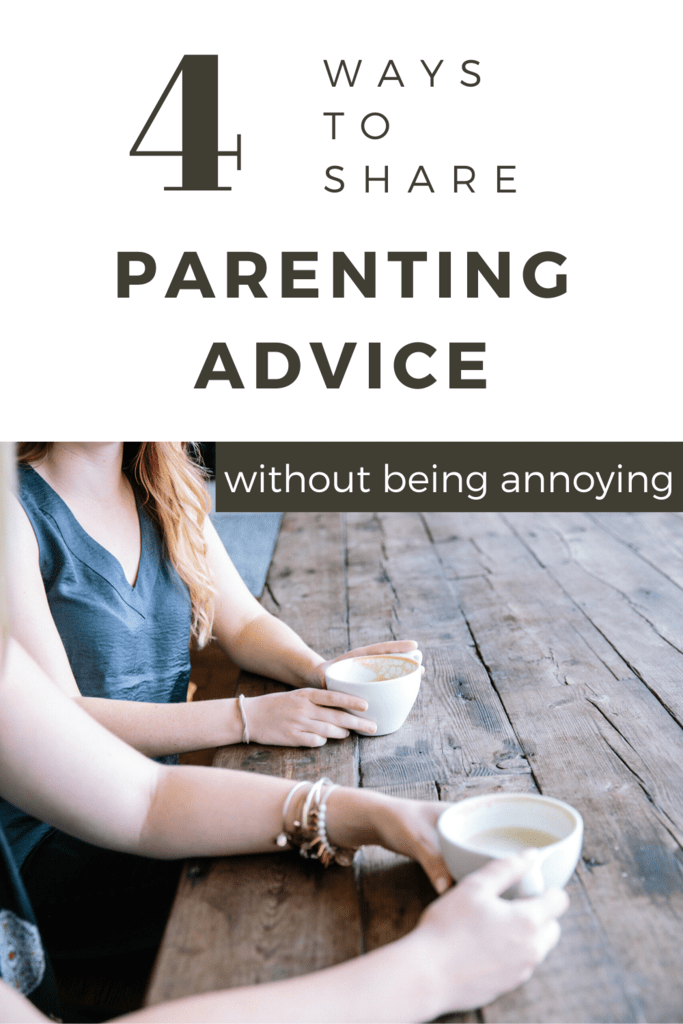
4 Ways to Share Parenting Advice Without Being Annoying

Everyone has met a parent who thinks they know it all. Aren’t they the most irritatingly pretentious people you have ever met in your life? However, parents sharing advice is vital for overcoming a range of issues that you may encounter no matter how old your child is. Especially for new parents who are still finding their feet. However, you sharing parental advice doesn’t need to come off in such a negative way. Below are four tips on how to share parenting advice without being annoying.


For more on this topic, check out the full Helping Others collection


Be Friendly About Giving Parenting Advice

Nobody likes a parent who storms in and starts barking orders and advice to other people. This is no way to get people to respect your opinions, and it will only hinder relationships between you and other parents. Instead, approach any advice giving like a friend. They will not care about how much you seem to know if you don’t first demonstrate to them that you do in fact actually care. People will always take advice from friends better than strangers, and building relationships will ensure you create a superb parenting network.

[ Read: How to be There for a Friend in Need ]


two women facing each other on swings and laughing together


Ask Questions, But Wait to Be Asked

There are very few people who accept unsolicited advice, especially when they don’t even know you that well. It’s always better to wait for someone to ask for your help rather than offering it without a prompt. Whether the questions relate to the benefits of a leading fertility clinic, or how to get their child to sleep, it’s always better to wait. However, once asked, asking questions will help you give a more thorough answer as you learn more about context.

[ Read: 7 Tips for Being a More Confident Mom ]


Only Share Your Experiences as Parenting Advice

Too many parents tell stories of friends of friends that dealt with specific issues in specific ways. But this can quickly become like a game of Broken Telephone. Further down the line, the point of the message is lost. While it’s okay to reference friends who had similar parental struggles, you should only offer advice that you have experienced. Otherwise, you may miss out on critical details, or fail to grasp the nuances of what made something a problem, or even why the methods were so successful to begin with.

[Read: 50 Simple Ways to Help Others]


3 women laughing together on a bench in front of a field of colorful tulips


Respect Other Parenting Methods

Everyone has a different parenting method. Some are overly positive, some are negative, but most find a healthy balance between the two. Regardless of how you parent, you should still make sure that you respect other parenting methods. For the most part, you don’t know anything about the other parent or their children, and you have no idea about their personal lives. Every family is unique, and each situation is very different.

So, while you can share general ideas and provide your thoughts about common issues, judging other parents for doing something that you wouldn’t do by saying ‘Well, that’s not how I’d do it, but…’ is not beneficial for anybody. Instead, show support for other moms in the community, and respect that they have a reason for doing everything.


Helping Others

Helping others with parenting is the very least you could do, but you must do so by respecting their parenting techniques as well as other individuals. There is no right way to parent. But there are plenty of ways to work alongside each other to ensure success for the parents and the child.

For more on this topic, check out the full Helping Others collection

Filed Under: Helping Others

The Birth of a Working Mom: Heading Back to Work After Maternity Leave

after maternity leave article graphic with photo of women at a conference table

Perhaps you are pregnant and completely giddy. (And yes, of course, exhausted, and you have heartburn.) Or perhaps you just gave birth to the most amazing and beautiful little human being. Time stands still while you’re gazing into those baby eyes, smitten with love. (And fatigue.) And perhaps you’ve had, to this point, a career with an upward trajectory. You’ve worked hard and found a field that excites you. You intend to return to the office when your maternity leave ends. But you’re just not quite sure how all of this is going to work out?!

Continue reading below to learn what 4 steps you should take when going on Maternity Leave; and then Returning Back to Work in a balanced, confident manner….

Read More

Filed Under: Work Life Balance

Balancing Motherhood & Working from Home

balancing motherhood and working from home article graphic over a photo of a woman working in a home office

When I was pregnant with my first son (in 2009), I had the incredible opportunity to be a paid blogger for What to Expect When You’re Expecting’s website. This first introduction into the world of working online opened my eyes to the potential of working from home, and I haven’t looked back since! I always wanted to stay home with my children. Working from home as a mom allowed me to pursue a career, hone my skills, and give me flexibility to set my own schedule.

But… even though it is the ideal situation for me and my family, it is not easy!…

Read More

Filed Under: Work Life Balance

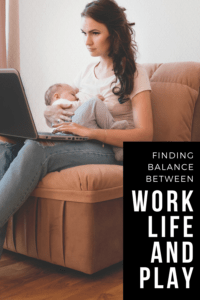
Finding Balance Between Work, Home, and Play

finding balance article graphic with picture of a mom holding her sleeping baby and a laptop

Finding Balance… we all strive for it. We all want to feel equal parts successful in everything that we do. And we, as new modern-day parents, are trying to do our best while juggling a lot!

We want to excel in our careers, our parenting abilities, our marriages, our friendships, our volunteering commitments, our coaching gigs, etc. But, sometimes I wonder, are we trying to juggle way – too – much?…

Read More

Filed Under: Work Life Balance

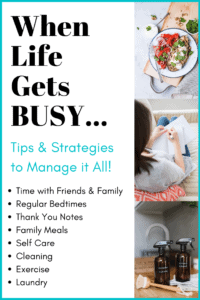
When Life Gets Busy… Tips & Strategies for Stress Management

When life gets busy, it can be so hard to keep those little, yet important things from falling through the cracks! We start to switch into survival mode where only the most crucial tasks gets completed; and while this is totally normal, it is not ideal! We are often left feeling unfulfilled, out of touch, and guilty about all of those tasks that got put on the back-burner for far too long. And often times, this leaves us searching for stress management solutions.

The reality is that life doesn’t ever really slow down. We can’t live our lives postponing things for the day when we aren’t busy – because, that day will never come.…

Read More

Filed Under: Work Life Balance

Family Conversation Starters – Education Options

We hear all the time how important it is to open up the lines of communication. Communication improves relationships with partners, friends, & coworkers; but we can’t forget that it also improves our relationships with our children. And, especially this time of year, it can help improve their conversation at school with their teachers and peers. Try these education questions and start talking with your kids.

Taking the time to have a genuine conversation with your child can be so much fun & so insightful! It also helps to build up a great family bond, which is why we are offering a few family conversation starters to go a long with each curated collection of content….

Read More

Filed Under: Education Options

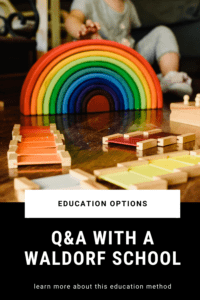
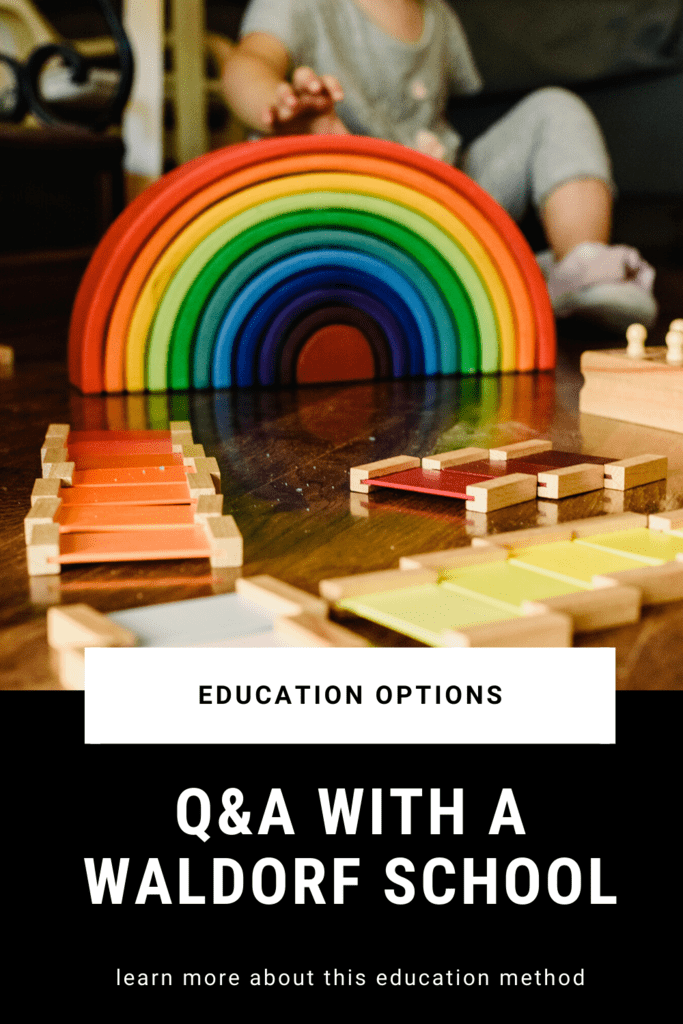
Information about Waldorf Education

Information about Waldorf Education

Recently I did a Q & A with Susquehanna Waldorf School. They are a private local school that offers a unique way of teaching through music and the arts. While they might not be local to you, I hope that you find their information informative, and that you will consider checking out your own Waldorf school around you!

I have had the pleasure of partnering with this school for another project, and I can tell you that my experience has been all positive! I encourage you to check them out if you live in Lancaster County.


Q:  What is the Waldorf education philosophy?

Founded in the early 20th century, Waldorf Education is based on the insights, teachings and principles of education. This is outlined by the world renowned artist, and scientist, Rudolf Steiner. The principles of Waldorf Education evolve from an understanding of human development that addresses the needs of the growing child.

Waldorf schools offer a developmentally appropriate, experiential, and academically rigorous approach to education. They integrate the arts in all academic disciplines, for children from preschool through twelfth grade, to enhance and enrich learning. Waldorf Education aims to inspire life-long learning in all students, and to enable them to fully develop their unique capacities.


EDUCATION OPTIONS

This collection is created to shed light and answer questions surrounding different types of schooling and education. We are not trying to compare, but rather give you insight into the differences. Each family will need to make their own decision regarding what works best for their child and family. There are no “right” answers. It is an individual decision that needs to be made based on your student’s individual needs, learning style, abilities, and resources. Read below for more information about Waldorf.

Our goal of this Education Options collection is to allow you to dive a little deeper into the possibilities and opportunities around you!

Public | Private | Homeschool/Cyber | Montessori | Waldorf | Classical | Unschooling


Q:  What are some similarities and differences in comparison to traditional schooling?

Waldorf Schools are similar to traditional/mainstream schools in that the curriculum offers a classical education in all academic disciplines.  Students engage in traditional academic subjects, such as Math, Science, History and Literature. What’s more, they learn not one, but two foreign languages. This begins in first grade with Mandarin and Spanish.  An emphasis on strong and healthy social connections, in a structured environment, will feel similar to traditional schools.

Some noticeable differences would be the lack of technology in the classrooms and the relationship with the class teacher. Also, the arts that are fully integrated into every subject and teaching modality.

Technology

Computers and digital technology are not part of the early grades curriculum. Although, mechanical technology and the practical arts are incorporated at all levels.  There are no screens, iPads, laptops or white boards in any of the classrooms at SWS.  In 8th grade, computers are introduced for keyboarding and as a tool for research. But only after students study coding and/or biographies of early innovators in computer technology. And perhaps after disassembling and reassembling a laptop! The question of “why” and “how” lives in everything we do.

Teacher

Additionally, the class teacher stays with a class for many years, sometimes from 1st to 8th grade. This allows the teacher to truly understand how a child learns and interacts with the world. It also allows them to get to know their student as a developing human being.  In addition, it establishes a significant level of trust between the student, the teacher, and even the parents.  Class teachers do not teach Subject like Language, Woodworking, and Music classes; so children do interact with several teachers each day.

Arts

The arts enrich every aspect of learning at a Waldorf School. Instead of using pre-printed text books, the children create their own books as records of their learning. They compose AND illustrate their lessons each day.  Research continues to show that the inclusion of the arts in academia increases aptitude and creative thinking. This benefits areas such as math and science; and has a positive effect on emotional development as well.  Teaching to the whole child, developing all of their capacities, is integral to the education.

Lastly, Waldorf places high value in art, critical thinking, and creativity. Waldorf does not pursue academic instruction before the age of seven.  An Early Childhood student is gaining the foundations for academic work. In language skills they work on annunciation and pronunciation through songs and poems. For fine and gross motor skills they practice through painting, finger knitting, chopping vegetables for snack, and movement in general. And to help develop an appreciation for math and science, they explore through building, climbing, setting the table, and skipping.

Their imaginative minds are nurtured through story-telling, puppet plays, and free play. When they enter the rich academic world of First Grade, their minds and bodies are prepared to eagerly and happily jump in.


Q:  How does Waldorf education benefit the students?

When art and music are tied into Math and Science, when stories are used to teach the characteristics of the letters and the math processes, the children are emotionally connected in a deeper way to their learning. This connection allows the lessons to stay with them longer.

Through experiential learning, Waldorf education is evolving the children’s creative and complex thinking.  SWS strives to develop a child’s academic, emotional, physical and spiritual capacities.

Professors who have taught Waldorf students across many academic disciplines and across a wide range of campuses—from State Universities to Ivy League—note that Waldorf graduates have the ability to integrate thinking. They assimilate information as opposed to memorizing isolated facts. They are also flexible, creative and willing to take intellectual risks. And also, they are leaders with high ethical and moral standards who take initiative and are passionate to reach their goals. Waldorf graduates are highly sought after in higher education.


Q:  What does a day in the life of one of your students look like?

Early Childhood

An early childhood student (mixed-age Kindergarten) spends a good part of the morning engaged in free play.  This time helps to build their motor skills, their social capabilities, and their imaginations.  Each classroom has a kitchen in which the children can help to prepare their healthy snack.

Circle time includes stories that are told by memory so that a child can create their own imagery, song and movement.  There is plenty of outdoor time each day, and a great reverence for nature is fostered.  One class walks to the Susquehanna River each day to start their morning.  The premise that “the world is good” and “we are kind and conscientious” is modeled and nurtured every day.

Grade Students

A grade student begins their day with movement as well. The early grades begin with Circle time where they may practice their times tables while passing bean bags. Or perhaps trace the shape of an S as they recite a poem about a slithering snake in the grass as they learn their letters.

The older grades may go outside to practice throwing the javelin and discus as part of their study of Ancient Greece and the Olympics. Or they might go on a bike ride and collect samples of leaf and plant species as part of their Botany studies.

Then the bulk of the morning is spent in Main Lesson. This is a period of about an hour and a half that is dedicated to the academic block they’re focused in (Math, Science, Literature, etc.).  There are no tests until the 5th grade.  A small class size allows for teachers to assess a student’s progress in other ways.

Subject

After snack and recess, the students attend Subject classes.  This includes two languages (Mandarin and Spanish for Grades 1-4 and Mandarin and Latin for Grades 5-8), Music, Fiber Arts/ Handwork (each child learns to knit in 1st grade), Woodworking, Eurythmy, Orchestra (each child begins a string instrument beginning in 3rd grade), Chorus, Games, and more.

After lunch and another recess, the early grades will finish the day with lighter activities. This includes Painting,  Reading, Nature Walk, etc.; and the older grades (Grade 4 and up) will have an additional Subject class or two as well as Clubs.  Each student finishes the day by helping with the classroom chores before dismissal.

Their classrooms use lamps and natural lighting, rather than overhead lights, and have soft paint colors on the walls. A child removes their shoes and puts on slippers or soft shoes (through Grade 3). There are nature tables, class pets, plants and pianos/ musical instruments in any given classroom. The goal is to create an atmosphere where the child is relaxed, and when they are relaxed they can take on learning in a stronger way.


Q:  How can families find more information about this style of learning?

The best way to truly experience the Waldorf approach is to visit.  We happily offer personal tours that accommodate any schedule, and Open Houses are available throughout the year. You can check out this website for additional Waldorf education in general – www.waldorfeducation.org, or check out our school’s website for more information – www.susquehannawaldorf.org


A big thank you to the Susquehanna Waldorf School’s Director of Admissions and Marketing for taking the time to provide us with this information! We hope that you will give Susquehanna Waldorf consideration when deciding upon your child’s education. And if you are not local to Lancaster County, we hope that you will keep an open mind and check out your local Waldorf school options.

Our goal of this Education Options collection is to allow you to dive a little deeper into the possibilities and opportunities around you!

Public | Private | Homeschool/Cyber | Montessori | Waldorf | Classical | Unschooling

Filed Under: Education Options

Egg & Cheese Omelette with Olive Oil

Egg Cheese Omelette with Olive Oil graphic

When getting ready for school, daycare, or even just for another busy day; it’s important to remember a healthy full-filling breakfast. Below is an easy nutritious meal that is great for kids through adults, and will give you enough energy to conquer the day! Try this simple egg & cheese omelet recipe today!
…

Read More

Filed Under: Education Options, Recipes

The Benefits of Prioritizing Family Dinner & How to Make it Happen

Family DinnerIn our house, meal time is family time. We make it a point to all eat a family dinner together most nights of the week. Sometimes this may mean that we eat early at 4:45, or some nights closer to 8 pm. But for us, we would rather be more lenient with our dinner schedule, and make the time we share together the priority….

Read More

Filed Under: Work Life Balance

  • « Go to Previous Page
  • Page 1
  • Interim pages omitted …
  • Page 84
  • Page 85
  • Page 86
  • Page 87
  • Page 88
  • Interim pages omitted …
  • Page 134
  • Go to Next Page »

Copyright© 2026 · Brunch Pro Theme by Shay Bocks

We use cookies on our website to give you the most relevant experience by remembering your preferences and repeat visits. By clicking “Accept”, you consent to the use of ALL the cookies.
Cookie settingsCLOSE and ACCEPT
Manage consent

Privacy Overview

This website uses cookies to improve your experience while you navigate through the website. Out of these, the cookies that are categorized as necessary are stored on your browser as they are essential for the working of basic functionalities of the website. We also use third-party cookies that help us analyze and understand how you use this website. These cookies will be stored in your browser only with your consent. You also have the option to opt-out of these cookies. But opting out of some of these cookies may affect your browsing experience.
Necessary
Always Enabled
Necessary cookies are absolutely essential for the website to function properly. This category only includes cookies that ensures basic functionalities and security features of the website. These cookies do not store any personal information.
Non-necessary
Any cookies that may not be particularly necessary for the website to function and is used specifically to collect user personal data via analytics, ads, other embedded contents are termed as non-necessary cookies. It is mandatory to procure user consent prior to running these cookies on your website.
SAVE & ACCEPT