• Skip to main content

Adore Them Parenting

Practical Positive Parenting Advice and Resources

Practical Positive Parenting

Go here for our book!

  • About Us
  • Our Book
  • Parenting Advice
    • Raising Children
    • Family Life
    • Seasonal
    • View All Topics
  • Free Printables
  • In the Media
  • Shop

Karissa Tunis

Back to School Tips for an Easier, Calmer Transition

The mornings are getting cooler. Stores are advertising back-to-school supplies and clothes. Argh! The first day of school is just around the corner. The summer weather persists for another month or two, but the ‘lazy’ days of summer must come to an end. And so the cycle of summer-to-school begins again. And as we all know, this time of year can unfortunately bring with it anxiety and fears. Continue reading below to help ease and calm down your child’s nerves. Instead, help them look forward to the school year and what is yet to come with these back to school tips!


This article is written by Fern Weis
For more on this topic, check out the full Back To School collection


Who’s Ready for Back to School?

Are you ready for the kids to go back to school? Are they ready? If you’re like my family, we had mixed reviews about the end of summer and the inevitable return to school. Why? Because we loved the fresh air and sunshine, earning money at a summer job, and taking a family vacation. After a while, though, we all longed for a little more, or different, structure and predictability.

Most kids are looking forward to being with their friends from school. Some relish the challenge of learning and achieving in the classroom. (I hope you have one of those kids!) Others need the structure and goal-oriented nature of school and extra-curricular activities.

So, how do you make the transition back to school easier on all of you?

[Read: Back to School – How to Help the Whole Family Adjust]


Shopping & Guidelines – Back to School Tips

Get excited about the shopping AND establish some guidelines. Going from store to store to store is not only exhausting, it’s a recipe for overwhelm and indecision. Make clear before you head out:

  1.  What’s on your shopping list.
  2.  What your budget is.
  3.  How many stores you will go to.

Your time, money and patience are in limited supply. That’s reality. If your maximum number of stores is three, make sure your kids understand that by the time you get to the third store, a decision is expected, or the items are not purchased. It’s a great opportunity to discuss the pros and cons of what they need and want, to examine quality and quantity, and how to spend within their means (well, your means, if you’re paying for it).

If you shop online, these guidelines can apply. I still encourage you to build in a little shopping expedition. There’s a different energy to getting out of the house, and to using all your senses in the shopping experience.

In the end, the biggest piece of this is about setting expectations before you go. You can avoid a lot of aggravation with a little bit of preparation.

[Read: How to Set Expectations for Your Kids and Improve Child Behavior]


Consider the First Day of School

Buy something special for the first day. Even high-schoolers will appreciate this. Back in the days when we had far less, that new pair of shoes was a big deal. Most of you can provide these things all year long, so finding something special may take some thought. It doesn’t need to be big, like a smart phone or other expensive item. It could be an accessory that wasn’t part of the original need-to-have list, a gift certificate, a manicure, or something inspiring to hang in their locker.

[Read: 3 Ways to Prepare for the First Day of School]


Ease Back into Routines for School

Ease back into routines. Of course the first one that comes to mind is sleep and the dreaded alarm clock. Take the remaining days or weeks to gradually change bedtimes and waking-up times. What other routines can you begin to add back?

[Read: The Importance of Family Routines for Sanity and Creativity]


Calm Down Anxiety about School

Allow them to express any anxiety. Will I make the grades? Will I keep all my friends? What about new teachers? How do I fit in? Even if they have a good track record in these areas, they are likely feeling stressed about it and should be encouraged to express it. Above all, do not discount what they are feeling!  They’re entitled to their feelings, whether you agree with them or not. This could be the time to talk (a conversation, not a lecture) about coping with stress.  Let them know that there’s normal stress and stress overload, and you’re going to check in with them if you see signs of them moving into overload. They may protest, but they’ll also be relieved to know you have their back.

[Read: Parenting an Anxious Child – Feeling Safe is the End Game]


School Memories

Share your own stories about school. It wasn’t always fun. Your kids can appreciate the difficulties of school – both work and relationships – and be inspired by how you handled it. Growing up is confusing, and you are proof that you can live through these baffling times. Whether you liked learning or not, in hindsight you know it was (mostly) useful. And to quote the late Robin Williams, “Nothing I learned was wasted.”

For more on this topic, check out the full Back To School collection


Featured Contributor: Fern Weis

Fern Weis is a Parent Coach and Family Recovery Coach. She helps parents of tweens, teens, and young adults who are going through difficult situations – from homework battles to addiction recovery – and all points in between. Fern works with parents to nurture the parent-child relationship, improve communication, and set firm and loving boundaries. Parents learn to confidently prepare their children to reach their potential and be successful through life’s challenges. Fern is regularly interviewed on Change Your Attitude…Change Your Life (WOR710 NYC), and is a contributor to Huffington Post and Ridgewood Moms.

  • Website: fernweis.com
  • Facebook: @YourFamilyMattersCoach
  • Instagram: @Fern.Weis


Filed Under: Back To School

Greek Style Peas Recipe

peas recipe

This dish is loaded with veggies, and only takes 10 min to prepare! Consider making ahead of time and just asking your sitter or nanny to heat up while you are out. Or leave the directions on the counter-top for everyone to have fun preparing this delicious Greek Style Peas Recipe together!

Now if your sitter throws a few chicken nuggets in the oven, or makes your little one a grilled cheese, at least they will have a full serving of a healthy option to go along with it!…

Read More

Filed Under: Childcare Options, Recipes

How Much to Pay a Babysitter?

How Much Should I Pay the Babysitter_It can be SO difficult to figure out how much to pay a babysitter?! There are plenty of factors to consider when calculating your babysitting rates. Such as the age of your children, the babysitter’s experience level, how many children they’ll be watching, the hours that they will be babysitting, where you live at within the country, and the list goes on!…

Read More

Filed Under: Childcare Options

Tips for Checking References When Hiring a Nanny

Tips for Checking References When Searching for a NannyHiring a nanny is no easy task! After a flurry of nanny interviews, you’ve finally narrowed down a candidate that seems like the perfect fit for your family. She has experience, she’s down-to-earth, and she’s level-headed. And oh yeah, one minor detail – your kids absolutely love her! You couldn’t be happier! But don’t sign on the dotted line and hire the nanny just yet…

Just when you thought the hard work was over, it’s time to check your potential nanny’s references. But no worries, right? Just a few quick phone calls to make sure her previous employer liked her, and that she showed up on time. Well, yes, but there’s more to it….

Read More

Filed Under: Childcare Options

Essentials of the Sports Mouth Guard

graphic for sports mouth guard article where there is text and an image of a red-headed youth football player putting in a mouth guard

Imagine what it would be like if you suddenly lost one or two of your front teeth. Smiling, talking, eating – everything would suddenly be affected. Knowing how to prevent injuries to your mouth and face is especially important if you participate in organized sports, or other recreational activities. Studies show that up to 39% of dental injuries result from playing sports. Of those injuries, 80% affect front teeth. This is why we are covering the topic of the sports mouth guard….

Read More

Filed Under: Sports

4 Things To Look Out For When Buying An Older Home

June 12, 2020

Buying a home is always a difficult process and there are a lot of things to consider. When you are buying a family home, you need to think about your needs as a family and what your priorities are in a house. You also need to consider the price and the amount of work that needs to be done on the property. If you are buying a new build property, you don’t need to worry too much about the condition, but things are more complicated if you are buying an older home.

Older properties are very popular because they have a lot of character and you can often get a better price on them, as long as you are willing to put some work in. But it’s important that you don’t take on too much work, which is why you need to be thorough when viewing houses. These are some of the most important things to look out for when viewing an older property.


For more on this topic, check out the full Moving Tips collection


victorian style home at golden hour

Dangerous Materials in Older Homes

In the past, a lot of houses were built using dangerous materials and it’s important that you check for things like asbestos or lead paint before you buy a house. If there is a lot of asbestos in the home and you think that it may have affected your health, you should seek the legal representation you deserve and make a compensation claim. When it comes to buying a house, you should always have a survey carried out to check for asbestos because it’s expensive to remove and you may not want to take that task on. If there is lead paint, that is easier to deal with but it’s important that you remove it safely.


Faulty Wiring

Older properties often have problems with the electrics because the wiring is very old. When the houses were built, people didn’t have anywhere near as many electrical devices, so old wiring is not capable of powering multiple laptops, phone chargers, TVs and kitchen appliances. If you start plugging lots of things in, there is a big fire risk. A lot of older properties have already had their wiring updated recently, but it’s important that you check this before buying the house because it will be expensive to rewire the entire property.


picture of a vintage radiator in a home

Structural Problems in an Old Home

Older properties are often prone to structural problems, and that’s not something that you can fix easily. If you buy a home that has foundation issues, you won’t be able to move in until it’s fixed, and that will be incredibly expensive and time consuming. When you are viewing a house, look out for cracks in the wall because this can be an indication of structural problems.


Roof Damage

Roof damage is another expensive problem that you won’t be able to ignore. A few loose tiles is nothing to worry about but if there are big holes in the roof, water will leak in and the walls will be damp and moldy. It will cost a lot to replace the roof and you will also have to cover the cost of dealing with damp, so make sure that you check the condition of the roof before you buy.


You need to make sure that you check these things before you buy an older property, so you don’t end up buying a money pit!

For more on this topic, check out the full Moving Tips collection


Filed Under: Home Buying, Moving Tips

Helping Your Elderly Parents: Pros and Cons of In-Home Care Services

June 12, 2020

When your own little family starts to grow, it’s clear that a lot of your time is spent caring for them. But as your own parents get older, you might find that you have to offer them support too. Helping your elderly parents means looking for reliable Senior Care. A way of ensuring that they not only have companionship but also help when they need it with washing, running errands, medication, etc. it’s vital to know where to look for such services. Even though you might be tempted to ask them to move into your family home, sometimes this simply isn’t possible.

Luckily, there are many reputable providers around the country that offer these types of services, meaning that you can select which one is most suitable. However, before doing this, it’s important that you identify the pros and cons of this decision, along with any alternatives.

To ensure you’re on the right path, here are some pros and cons to in-home care services so you’re always in the know…


For more on this topic, check out the full Senior Care collection


elderly woman with short white curly hair washing vegetables at the sink near the window

Pros of In-Home Care Services for Helping Your Elderly Parents


Flexibility in Services for Care

As aforementioned, a big reason why so many people opt for in-home care services is the flexibility in the services that they have to offer. Available on demand, they can select what services they need – no matter what condition their health is in.


Greater Independence for Elderly

By staying in their own home rather than moving into a facility, they will be able to continue to enjoy their home comforts. This also includes being able to keep their pets by their side throughout the process.


Stability for Your Parents

As they can remain within their community, they can continue to have family or friends to visit whenever they like. This advantage is welcomed by anyone who wants to stay connected with their community and remain in the house that they’ve lived in for many happy years.


High Standard Care

As in-home care senior care services are registered with national regulators, you can have the peace of mind that your loved one is in safe hands. Receiving high-quality care at all times, they can have the attention they require.


elderly man sitting at a kitchen table reading a newspaper in a sunny room full of windows

Cons of In-Home Care Services for Helping Your Elderly Parents


Cost of In-Home Care Services

Receiving personalized care within their home (sometimes 24/7) can be expensive. Not only will they have to pay for the service, but updating their home so that it’s more practical for them. This could involve fitting a stairlift, making the bath more accessible, etc. 


Different Carers for Your Elderly Parents

Although they will be receiving personalized care, often when you opt for in-home care services through an agency your parent will have different members of staff caring for them. Because of this, your parent might find it harder to connect with each carer, resulting in them having resentment towards them. 

elderly couple sitting side by side in a residential care facility

The Alternative: Residential Care for Your Parents

As aforementioned, often the alternative to in-home care is residential care. With this option, there are many benefits. These benefits include ensuring that your parent is having round the clock care within a safe environment. And they can also socialize with others within the home. 

However, this comes with a price. Even though the cost will depend on location, the level of care required and the standard of the home itself, the overall expense isn’t something that should be ignored. It’s therefore important to weigh up the costs, along with the other factors mentioned above before taking the leap and making the decision as to what option is better. 

When doing this, of course, it’s important to talk to your parent and ask them how they feel about the decision, along with which one suits them better. You obviously don’t want to force them into either if they aren’t happy with it. So sit down and discuss it with them first.

For more on this topic, check out the full Senior Care collection


Filed Under: Senior Care

Ideas to Make Money on the Go

When you’re not in one place for long, it can be tricky to maintain a revenue stream. However, the internet has revolutionized how we work. With the latest tech, you can make money from any location, and even turn a profit when you’re constantly on the go. If you want to keep your income flowing regardless of your location, take a look at these innovative ways to make money on the go.


For more on this topic, check out the full Saving Money collection


1.  Launch a Blog

A popular blog is a great way to make a passive income. While it does take time and strategy to build up your audience, it does allow you the freedom and control to create your vision. As you build up your followers, you can increase the value of your work. Whether you offer paid placements or ad space, brands will always be happy to pay if you’re able to increase their reach within a specific demographic.


make money on the go


2.  Release an App

This can be easier said then done, but it is not impossible! If you have some tech knowledge, you could teach yourself what you need to know and create an app. Of course, you don’t have to do the backend development yourself if you’re not confident in your skills. There are many companies out there that offer app creation services, so you can turn your ideas into secure and functional apps within a short time-frame.

Apps can also be a great way to make money on the go because they offer a range of revenue streams. You may want to charge people to download and use your app, for example. Or you can offer your app for free, but incorporate in-app purchases to keep revenue flowing in.

When users turn off two-factor authentication with these easy steps, https://setapp.com/how-to/turn-off-two-factor-authentication-for-apple-id, they can make seamless transactions without it having a negative impact on their experience. Finally, you could make money by featuring ad content on your app. This will generate more revenue and may even encourage users to pay for a premium, ad-free version of your app, which means you can really capitalize on your content.


3.  Participate in Market Research

Brands are always looking for people to take part in market research activities, so register with reputable sites and start earning today. You can test new products in return for giving companies your honest feedback, which means you can cut the cost of your outgoings and enjoy free swag instead.

Furthermore, many companies pay market research participants for their time. With online databases, video conferencing, and collaboration tools, a significant number of agencies are now collecting data online, rather than face-to-face. This means it’s the perfect way to make money while you’re on the go. With no restrictions or obligations, you can simply choose when you want to work and how much you want to make.


Learn How to Generate Passive Income

When you’re traveling and you want to make money, generating passive income will keep the cash coming in around the clock. It can take time to build up a passive revenue stream, but it’s always worthwhile. When you’re able to turn a profit while you’re sleeping, your potential for making money on the go really is limitless!


Saving Money

To go along with these suggestions, it is always important to look for new ways to save money at home and stretch your dollar. This will then allow you to reallocate your funds and budget to whatever new projects you would like to invest in. Good luck on your new creative endeavors!

For more on this topic, check out the full Saving Money collection

Filed Under: Saving Money

Baby and Child Sleep Schedule From 6 Months to Preschool

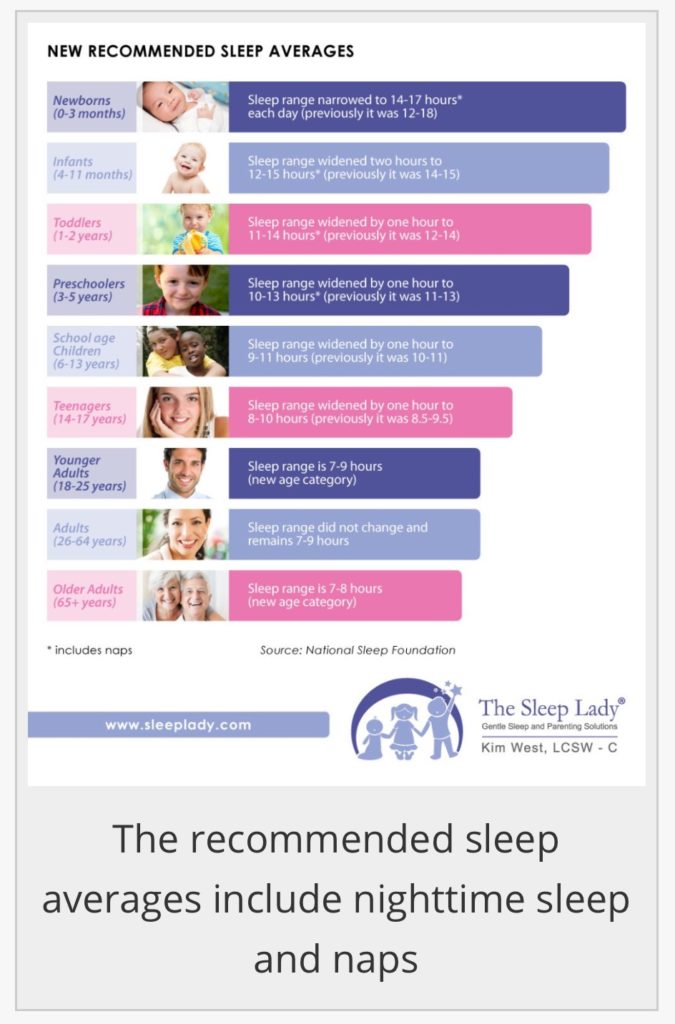
Sometimes it seems like babies and young children grow up in the blink of an eye. They leave behind one skill and gain another as fast as you can get out your camera. While they are growing, their sleep needs change too. Your three naps-per-day infant grows quickly into a one-nap toddler, and gradually shifts towards getting all of their sleep overnight. It can be hard to keep up with their sleep schedules when they are always changing, so we have put together a handy list of sample schedules for each age group. These are the same schedules you can find in your pediatrician’s office, courtesy of The Sleep Lady. Scroll down for sample sleep schedule broken down by age.

AAP and NSF recently came out with new sleep average recommendations, however they group night and day sleep together. As a result we have separated naps and night sleep, and shared the averages in these articles. Please know that there is always at least one hour wiggle room on these averages. Watch your clock AND your child to determine where you child falls within the average.


This article is written by Kim West, The Sleep Lady
For more on this topic, check out the full Sleep collection


Sleep Schedule for Your:

Six to Nine-Month-Old

At around 6 months, babies need an average of eleven hours of uninterrupted nighttime sleep, and three and a half hours of daytime naps spread over two to three naps. From six through eight months, babies become more mobile. They roll over, sit up, maybe even stand holding on to something. Many scoot or crawl, and the first teeth come in. Most babies sleep through the night fairly regularly, but if yours doesn’t, it is still quite easy to get them on a good 6 month sleep schedule.

Continue Reading


20 Free Printable Bedtime Charts

For more on this topic, check out the full Sleep collection


Nine to Twelve-Month-Old

Nine to twelve-month-old babies are reaching developmental milestones at an amazing rate. These babies are more mobile, crawling and pulling themselves up in their cribs, and can pop up each time you put them down at bedtime. Some walk by their first birthday—a major developmental milestone that can temporarily disrupt sleep. Increased activity can tire them out, so you have to pay very close attention to their sleep window, when they are most ready and able to fall asleep. Some can even fight sleep, and hide their sleep cues making it easy to miss that ideal sleep window.

Continue Reading


Thirteen to Eighteen-Month-Old

At this age toddlers need an average of eleven and a quarter hours of uninterrupted sleep at night and two and a quarter to two and a half hours during the day. Children at the younger end of this age bracket take two naps, in the morning and afternoon, but by eighteen months most consolidate to one midday or afternoon nap. The thirteen to eighteen month old schedule has to work in that nap transition while also considering the complicated development that can cause sleep problems.

Continue Reading


Sleep Schedule for Your:

Eighteen Month to Two-and-a-Half-Year-Old

How much sleep do toddlers need? That is a question that has many answers, and it depends on the age of the toddler. An eighteen month old on average sleeps eleven and a quarter hours at night and two and a quarter hours during one midday or afternoon nap. At age two, sleep requirements drop to eleven hours at night and two during the day. Over the next year that will drop to ten and a half hours at night and one and a half during the day.

Continue Reading


Two-and-a-Half to Five-Year-Old

Between ages two and three, average sleep needs drop to about ten and a half hours a night, plus an hour-and-a-half afternoon nap. Four year olds need eleven and a half hours at night, and most no longer nap daily, although they do need about forty-five minutes of quiet time each afternoon and possibly an occasional nap. Five-year-olds sleep about eleven hours a night, and afternoon quiet time is still beneficial.

Continue Reading


For more on this topic, check out the full Sleep collection


Featured Contributor: Kim West, LCSW-C The Sleep Lady


Kim is a Licensed Clinical Social Worker who has been a practicing child and family therapist for more than 24 years. She is now the world’s foremost expert on child behavioral sleep and on a mission to help 1,000,000 families find sleep by 2020. With trained Gentle Sleep Coaches® (19 countries worldwide), free articles and guides, e-courses, and the bestselling book Good Night, Sleep Tight — tens of thousands of families from all over the world have found sleep again with The Sleep Lady’s gentle, proven sleep methods.

  • Website: sleeplady.com
  • Facebook: @TheSleepLady
  • Instagram: @thesleeplady


Filed Under: Sleep

Sleep Training at 4 Months & Why it Might be Better To Wait

Just a caveat before we start: If you started sleep training at 4 months and it worked well without a lot of stress, this article isn’t for you. For some families, with predictable, mellow babies or family needs that require big chunks of sleep right now, sleep coaching at 4-months may be a good option.

However, some parents may feel pressured by sleep advice books who say to start sleep training at 4 months, or even now [1] (some say even earlier [2]) or experts who warn that if you don’t do it now, it will be much harder — maybe even impossible — later[3]. Other parents may have tried to follow the advice from books and found that there was a lot more crying and not much progress on lengthening sleep.


This article is written by Macall Gordon for The Sleep Lady
For more on this topic, check out the full Sleep collection


There are reasons why sleep training at 4 months can be difficult. Or, in some cases, unwise at this age. Further, the push to start sleep training early is actually not borne out by existing research on sleep. While it’s true that if you do nothing at all, research shows that sleep problems will persist [4], there is no research that clearly demonstrates the need to start this early or whether it’s problematic to wait until 6-months.


Why is sleep training so difficult at 4-months?

Brain Growth & Development.

The biggest culprit is The 4-Month Regression — a massive jump in both physical growth and brain development that can result in feeding disruptions or bursts, more fussy behavior, and more disrupted sleep. In fact, sleep will be a little more disrupted around all of the big developmental milestones that happen into the second year. For many babies, sleep isn’t always something that stays fixed. It can be full of ups and downs as little ones mature across those first two years.

[Read: Baby’s 1st Milestones]


Feeding needs.

Feeding at this age can also still be quite unpredictable and varies a lot between individual babies. Frequent feeding at this age can be normal, or a sign of an underlying physiological issue like silent reflux or an organic feeding difficulty [5]. Further, babies’ tummies at this age are small. There are limits to how long they can go without a feed. There are limits for moms, too. In fact, some research showed that feed spacing was related to a higher rate of lactation problems and stopping breastfeeding [6]. At this age, milk is a potent sleep-inducer. Attempting to lengthen the feeding interval past what the baby can tolerate can result in a lot more crying. Ruling out feeding or reflux issues with a healthcare provider or lactation consultant can give parents good guidelines for how to manage bedtime and nighttime feeds and awakenings.

[Read: Fed is Best]


Silent Reflux or Milk Allergy.

Parents we see often say, “My baby doesn’t have reflux because they’re not spitting up.” If your baby cries a lot, doesn’t tolerate lying on their back, arches during feeding, or doesn’t seem to sleep well anywhere, you may want to investigate whether your baby has reflux that doesn’t result in spitting up. A baby in pain will not be able to sleep well and may need a lot of parental help with soothing if they’re not feeling well.

[Read: Answers for All of Your Common Newborn Concerns]


Basic self-soothing abilities are still forming.

Parents are frequently told that if you leave the baby to cry, they will learn to stop signaling for help and will instead, self-soothe and return to sleep. “Self-soothing” is not a skill that infants are simply born with. Their ability to calm themselves down when they are distressed develops gradually over the first two or three years.

Between 4- and 6-months, the brain undergoes a massive burst of synapse growth as important skills and abilities are established [7]. Self-soothing is not merely a matter of stopping crying and going to sleep, but involves a complex system of skills including reorienting, distraction, soothing, and finally, sleep, and requires help from specific parts of the brain that may not be “online” at this stage.

Four-month-olds only have a few tools in their “self-soothing” toolbox. These very basic abilities help them tolerate only very small amounts of distress before they need help calming down [8]. At this stage, they may be able to turn their head to view their hands or turn away from what’s bothering them, but they don’t have the skills — or the brain structures — necessary to calm down from more intense distress. This may be why you find that trying to do sleep training at 4-months results in more crying and less sleep training success.

The skills that babies need to manage sleep and crying are more firmly in place after the 6-month mark and they will continue to expand across the first few years.

There is no research that clearly demonstrates the need to start sleep training early, or whether it’s problematic to wait until 6-months.


What do we know about sleep training before 6 months?

Not much.

There is virtually no research on sleep training that involves crying at 4-months. The vast majority of research on infant sleep training has been focused on toddlers and preschoolers [9]. Even staunch cry-it-out researchers do not study infants under 6-months [10].

Existing research on behavioral approaches to improve sleep in younger infants, typically focuses on prevention of sleep problems which may include helping parents understand cues and appropriate sleep hygiene, and only very limited practice slowing down their response to bedtime or nighttime fussing — as little as 1-2 minutes [11]. To date, only one study has used very limited crying with a group of 4-month-olds [12]. In this study, infants still woke during the night at the end of the intervention.

[Read: Promoting Healthy Sleep]


It may result in frustration and poorer parental confidence.

Jumping to sleep training without looking at development, feeding, temperament, etc. may set parents up for negative experiences. Toughing it out with a lot of crying when the baby may be developmentally unready or has a feeding issue can result in a lot of parental guilt and anxiety [13]. Parents may wonder why the approach isn’t working like the book said it would. It doesn’t help that a lot of advice can make it sound like continued night-waking is parents’ fault. Parents may end up feeling that the intervention isn’t working because they aren’t doing it right. Instead, it may just be too soon to begin. It’s okay to stop and try again after 6-months.

There are many gradual ways to work on sleep. It’s important to choose something that’s developmentally appropriate and works with your own values and goals.

The parenting road is long. There is no scientific reason to rush to start sleep training. Research suggests there are lots of good reasons to wait until they’re closer to six-months.

[Read: How to Get Through Your First Year of Motherhood]


What you can do at 4 months

Focus on getting good daytime feeds.

Try to nurse/feed in a quiet, darkened room so that your baby can focus on feeding, and not all the interesting things that he/she can now see so much more clearly because of development in the visual portion of the brain. A check-in with a lactation consultant if your baby is very fussy can be a good idea to help with any underlying feeding issues.


Get daytime naps in any way that works.

Babies under 6-months can only stay awake about 90-minutes at a time. Good daytime naps will help encourage good nighttime sleep. Holding or feeding to sleep or using motion (swing, carrier, etc.) is okay for now. It won’t be a lasting “bad habit.” You can fade out of all of these ways to get your baby to sleep and transition to a firm surface once your baby has passed through the 4-month sleep regression and is closer to 6-months.


Practice “drowsy but awake” at bedtime, but don’t expect results.

You can practice putting your baby down to sleep before they’re totally out and see if you can soothe them the rest of the way. If it doesn’t work well, don’t worry about it and just try again another time. Just practicing this skill will help once you start coaching in earnest.


If your particular situation requires that you to work on sleep now, go slowly until the regression is over.

Try a gradual approach and carefully monitor how much and how intensely your baby cries. There are gradual options for this age. Consider contacting a Gentle Sleep Coach to give you support and help problem-solve your options.


Remember

Once your baby is older than 6-months and if they’re still waking more than you’d like, you can make changes knowing that your little one is more ready and able to learn to manage their sleep.

For more on this topic, check out the full Sleep collection


This article was written by Macall Gordon, a Gentle Sleep Coach, for The Sleep Lady

Macall Gordon has a B.S. in Human Biology from Stanford University and a Master’s degree in Applied Psychology from Antioch University Seattle. Her graduate training included infant observation, attachment, emotional regulation, child development, and family systems. She has also conducted and presented research examining the research underpinning existing infant sleep interventions at child development and infant mental health conferences around the world. Her other research has examined current sleep advice and its impact on parenting experiences with managing their baby’s sleep. Macall is an Adjunct Faculty at Antioch University, Seattle, teaching research in the graduate program in Applied Psychology, Counseling & Family Therapy. She is also a WA State Certified Counselor (#CL60604117) approved by Washington State to work with parents and families.


Featured Contributor: Kim West, LCSW-C The Sleep Lady

Kim is a Licensed Clinical Social Worker who has been a practicing child and family therapist for more than 24 years. She is now the world’s foremost expert on child behavioral sleep and on a mission to help 1,000,000 families find sleep by 2020. With trained Gentle Sleep Coaches® (19 countries worldwide), free articles and guides, e-courses, and the bestselling book Good Night, Sleep Tight — tens of thousands of families from all over the world have found sleep again with The Sleep Lady’s gentle, proven sleep methods.

  • Website: sleeplady.com
  • Facebook: @TheSleepLady
  • Instagram: @thesleeplady

[1]       Ezzo, G., & Bucknam, R. (2012). On becoming babywise. Sisters, OR: Hawksflight/ParentWise. Giordano, S., & Abidin, L., (2006). The baby sleep solution: A proven program to teach your baby to sleep twelve hours a night. New York, NY: TarcherPerigee. Herman, C., & Ryan, K. (2012). The dream sleeper. San Francisco, CA: Jossey-Bass Waldburger, J., & Spivak, J. (2007). The sleepeasy solution. New York, NY: HCI.
[2]       Ezzo & Bucknam (2012). Giordano & Abidin (2006); Weissbluth (2015)
[3]   Weissbluth (2015).
[4]   (FOOTNOTE ABOUT SLEEP PROBLEMS PERSISTING)
[5]   Douglas & Hill (2013)
[6]   Douglas, P. (2013). Diagnosing gastro-esophageal reflux disease or lactose intolerance in babies who cry a lot in the first few months overlooks feeding problems. Journal of Pediatrics and Child Health, 49, e252-256.
[7]   Bourgeois, J. P. (2001). Synaptogenesis in the neocortex of the newborn: The ultimate frontier for individuation. In C. A. Nelson & M. Luciana (Eds.), Handbook of developmental cognitive neuroscience (pp. 23-34). Cambridge, MA: MIT Press. Trevarthen, C., & Aitken, K. J. (2003). Regulation of brain development and age-related changes in infants’ motives: The developmental function of “regressive” periods. In M. Heimann (Ed.) Regression Periods in Human Infancy (pp. 107-184). Mahwah, NJ: Erlbaum.
[8]   Kopp, C. B. (1989). Regulation of distress and negative emotions: a developmental view. Developmental Psychology, 25(3), 343-354.
[9]   France, K. G., & Hudson, S. M. (1990). Behavior management of infant sleep disturbance. Journal of Applied Behavior Analysis, 23(1), 91-98. Gordon, M. D., Hill, S. L., & Forisha, B. (2006, July). “Crying it out:” A critical review of the literature on the use of extinction with infants. Poster presented at the World Infant Mental Health Conference, Paris, France.
[10]   Gordon, M. D., Hill, S. L., & Forisha, B. (2006, July). “Crying it out:” A critical review of the literature on the use of extinction with infants. Poster presented at the World Infant Mental Health Conference, Paris, France. France, K. G., & Hudson, S. M. (1990). Behavior management of infant sleep disturbance. Journal of Applied Behavior Analysis, 23(1), 91-98. Lawton, C., France, K. G., & Blampied, N. M. (1991). Treatment of infant sleep disturbance by graduated extinction. Child & Family Behavior Therapy, 13(1), 39-56 Owens, J. L., France, K. G., & Wiggs, L. (1999). Behavioural and cognitive-behavioural interventions for sleep disorders in infants and children: A review. Sleep Medicine Reviews, 3(4), 281–302. Hiscock, H., Bayer, J. K., Hampton, A., Ukoumunne, O. C., & Wake, M. (2008). Long-term mother and child mental health effects of a population-based infant sleep intervention: cluster-randomized, controlled trial. Pediatrics, 122(3), e621-e627.
[11]   e.g. Matthey, S., & Speyer, J. (2008). Changes in unsettled infant sleep and maternal mood following admission to a Parentcraft residential unit. Early Human Development, 84(9), 623-629. St James-Roberts, I. (2008). Infant crying and sleeping: helping parents to prevent and manage problems. Primary Care, 35(3), 547–67, viii. St James-Roberts, I., Sleep, J., Morris, S., Owen, C., & Gillham, P. (2001). Use of a behavioural programme in the first 3 months to prevent infant crying and sleeping problems. Journal of Paediatrics and Child Health, 37(3), 289–297.
[12]   Adachi, Y., Sato, C., Nishino, N., Ohryoji, F., Hayama, J., & Yamagami, T. (2009). A brief parental education for shaping sleep habits in 4-month-old infants. Clinical Medicine & Research, 7(3), 85-92.
[13]   Tse L., & Hall, W. (2008). A qualitative study of parents’ perceptions of a behavioural sleep intervention. Child Care Health & Development, 34, 162–72.

Filed Under: Sleep

  • « Go to Previous Page
  • Page 1
  • Interim pages omitted …
  • Page 86
  • Page 87
  • Page 88
  • Page 89
  • Page 90
  • Interim pages omitted …
  • Page 134
  • Go to Next Page »

Copyright© 2026 · Brunch Pro Theme by Shay Bocks

We use cookies on our website to give you the most relevant experience by remembering your preferences and repeat visits. By clicking “Accept”, you consent to the use of ALL the cookies.
Cookie settingsCLOSE and ACCEPT
Manage consent

Privacy Overview

This website uses cookies to improve your experience while you navigate through the website. Out of these, the cookies that are categorized as necessary are stored on your browser as they are essential for the working of basic functionalities of the website. We also use third-party cookies that help us analyze and understand how you use this website. These cookies will be stored in your browser only with your consent. You also have the option to opt-out of these cookies. But opting out of some of these cookies may affect your browsing experience.
Necessary
Always Enabled
Necessary cookies are absolutely essential for the website to function properly. This category only includes cookies that ensures basic functionalities and security features of the website. These cookies do not store any personal information.
Non-necessary
Any cookies that may not be particularly necessary for the website to function and is used specifically to collect user personal data via analytics, ads, other embedded contents are termed as non-necessary cookies. It is mandatory to procure user consent prior to running these cookies on your website.
SAVE & ACCEPT